Fouad Ajami Quotes
The dream of an Egypt without beards and veils is illusory.
In the last centuries, Egypt has been intellectually more advanced than the other Arab countries. It has a significant number of modernists who oppose religious influences on Government. During the Arab Spring when the old regime was ousted, the modernists had hopes that a modern democracy would be formed that was not controlled of even significantly influences by religious leaders and where women would have equal rights. However, the first election the Muslim Brotherhood, a religious party won, and then tried to institute Islamic law—Sharia. A coup ousted the Muslim Brotherhood, and then many dreamed again of a modern, non-sexist, secular democracy. Professor Ajami tried to give them a more realistic view.
Fouad Ajami, Political Scientist, “Deadly Violence Across the Middle East”, CNN, December 27, 2013
Sourced by: Eigen's Political and Historical Quotations

This was another historical reality that shocked traditionalists. There was nothing in the Koran or Islamic scripture requiring women to wear veils and burkas. Many Muslims and non-Muslims, to this day, do not realize that.

He was one of the first Islamic thinker to distinguish between the Koran and the requirements of Islam on the one hand and the traditions of the cultures of the Arabian Peninsula on the other. For example, there is no justification anywhere in Islamic theology for the “Honor Killing” of women; it was a long standing tradition of some of the cultures. But many Muslims and non-Muslims believe that the practice is a part of Islam. There are hundreds of other examples and Abduh tried to eradicate the influence of these traditions. He had traditional and extremist opponents in his lifetime as well as today.


He is often referred to as The Reformer as he was a modernist. In particular, the told his people that there was no religious obligation is Islam for wearing a veil or a burka. These are just customs. Yet most Muslims still believe that veils and burkas were required by God. The only Koranic statement on the subject simply says that women should dress modestly. Despite his efforts, veils and burkas are still required by most Afghani families and most people think the requirement is religious.
At the time, Muslim clerics had a great deal of influence and in many cases legal control over all facets of Turkish society much as exists in other Islamic societies today. They even controlled what was taught in the schools. Remarkably, without bloodshed, Ataturk broke both the power and the influence of the clerics on all official and public activities. Many Turkish Muslims even developed a type of reformed Islam with the relationship between the individual and the clerics one of parity much like Protestant churches in the West. At the same time there was a more orthodox part of the population and while they sent their children to religious schools, they also attended public schools so even the orthodox Muslims in Turkey learned science and modern subjects which are still not taught in most Islamic schools and madrassas.


This is one of the biblical passages which cause some Christian Fundamentalists to prescribe a secondary and subjugated role for women. Also the view that women, like children, should be seen and not heard. Also it supports those who object to women in the ministry or the priesthood or in senior teaching positions. See {587063}. It is useful to note that much of Islam which preaches a similar view of females, probably learned it from Christianity which preceded Islam by almost 600 years.

All modern legal systems conflict in some respects with a literal interpretation of the Koran which is the basis for the traditionalists view of Sharia—Islamic law. Therefore a student of modern law is learning things which go against Sharia as interpreted by fundamentalists. There was a time when Jewish and Christian American religious families were uncomfortable with studding modern law as there were contradictions with Biblical law. There are still a few.


This quotation demonstrates that even in the Iranian Islamic Fundamentalist Theocracy, not all the religious leaders are extremists and anti-human rights. However, Saanei is no longer in the top level of the Iranian government and more extreme fundamentalists have control of the government. But Iran is by no means monolithic.

Jinnah’s vision was for a modern educational system and curriculum throughout Pakistan. He would not have recognized the religious madrassas that taught only the Koran and Islamic subjects that became so prevalent in Pakistan by the 21st century.


Ibn al-Nafis was one of the great scientists of all time. He analyzed the human heart, lungs, and circulatory system. This quotation is often given by Muslim modernists and reformers to illustrate that Islam at one time was open to new knowledge, dissent, ideas of all kinds. A century later, Islam closed intellectually and later and even today, Muslims are killed for what became heresy. Truth became determined by the Koran and the words of The Prophet only, Christianity and the Church imposed a similar restrictive view of truth using the Bible and Jesus. However, the Reformation and modernity led Christianity to merge and adopt the more modern and scientific view with the exception of some Christian fundamentalists. Islam had the modern view and abandoned it causing the many educated Islamic reformers and modernists of today great difficulty in changing the culture and laws as a whole.
The burqa wearing practice was outlawed by French Law.

This quotation illustrated the extreme polarization between the current fundamentalist Muslims, and the Muslim modernists and the West. Kamal Ataturk, the great leader and stateman who is the father of modern Turkey, is castigated by the author for leading the new Turkish parliament to depose the Caliph – the civil and religious autocrat, one of whom reigned from after the death of Muhammad till his abolishment in 1924. Most of the rest of the world credits Ataturk with being one of the great leaders of all time—one who led a democratic revolution which transformed Turkey into the only Muslim secular democracy, requiring pubic secular European type education for all children, giving women the right to vote (before the U. S. even), adopting a European alphabet and dress, and outlook on life—creating most remarkably a total cultural revolution with virtually no loss of life. No revolutionary leader, before or since has led so extensive a political and cultural revolution, and it was a bloodless revolution. Turkey, into the 21st century, was by far the most powerful, industrialized, scientific and modern nation of Muslims in the world and others were far behind. Yet many Islamic theologian still castigate Atatork for his great achievements as being against the will of God.


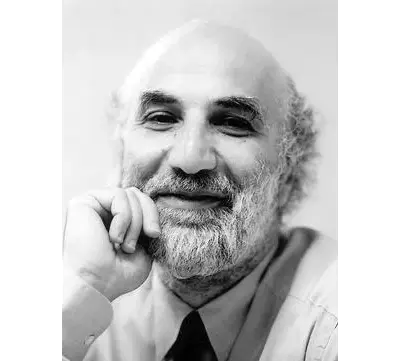
Fouad A. Ajami was a MacArthur Fellowship winning, Lebanese-born American university professor and writer on Middle Eastern issues. He was a senior fellow at Stanford University's Hoover Institution.
