IBN AL-NAFIS
(Ala-al-Din abu al-Hasan Ali ibn Abi-Hazm al-Qarshi al-Dimashqi)
Ibn al-Nafis was one of the great scientists of all time. He analyzed the human heart, lungs, and circulatory system. This quotation is often given by Muslim modernists and reformers to illustrate that Islam at one time was open to new knowledge, dissent, ideas of all kinds. A century later, Islam closed intellectually and later and even today, Muslims are killed for what became heresy. Truth became determined by the Koran and the words of The Prophet only, Christianity and the Church imposed a similar restrictive view of truth using the Bible and Jesus. However, the Reformation and modernity led Christianity to merge and adopt the more modern and scientific view with the exception of some Christian fundamentalists. Islam had the modern view and abandoned it causing the many educated Islamic reformers and modernists of today great difficulty in changing the culture and laws as a whole.
Ala-al-Din Abu al-Hasan Ali Ibn Abi al-Hazm al-Qarshi al-Dimashqi. The Western Scientist first credited with describing the circulation of blood through the body and showing that Galen erred was William Harvey in 1628, almost 4 centuries later. One theory as to why it took the Christian world so long was that Galen was held in great reverence and Christianity discouraged original thinking and writing which could cost a scientist his life. At the time (the 13th century) the Islamic world was intellectually more liberal and there was no establishment or Islamic vested interest in Galen or his theories.
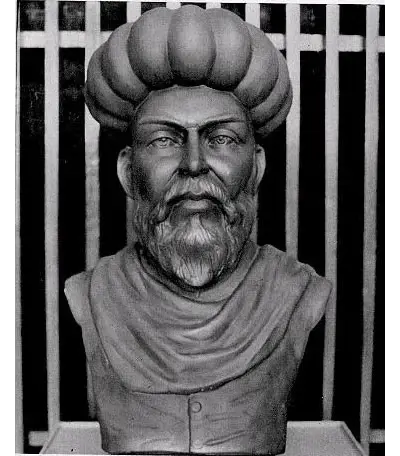
Ala-al-Din abu al-Hasan Ali ibn Abi-Hazm al-Qarshi al-Dimashqi (Arabic: علاء الدين أبو الحسن عليّ بن أبي حزم القرشي الدمشقي), known as Ibn al-Nafis (Arabic: ابن النفيس), was an Arab polymath whose areas of work included medicine, surgery, physiology, anatomy, biology, Islamic studies, jurisprudence, and philosophy. He is known for being the first to describe the pulmonary circulation of the blood. The work of Ibn al-Nafis regarding the right sided (pulmonary) circulation pre-dates the later work (1628) of William Harvey's De motu cordis. Both theories attempt to explain circulation. 2nd century Greek physician Galen's theory about the physiology of the circulatory system remained unchallenged until the works of Ibn al-Nafis, for which he has been described as "the father of circulatory physiology".
