Ibn Al-Nafis Quotes
...The blood from the right chamber of the heart must arrive at the left chamber but there is no direct pathway between them. The thick septum of the heart is not perforated and does not have visible pores as some people thought or invisible pores as Galen thought. The blood from the right chamber must flow through the vena arteriosa (pulmonary artery) to the lungs, spread through its substances, be mingled there with air, pass through the arteria venosa (pulmonary vein) to reach the left chamber of the heart and there form the vital spirit.
Ala-al-Din Abu al-Hasan Ali Ibn Abi al-Hazm al-Qarshi al-Dimashqi. The Western Scientist first credited with describing the circulation of blood through the body and showing that Galen erred was William Harvey in 1628, almost 4 centuries later. One theory as to why it took the Christian world so long was that Galen was held in great reverence and Christianity discouraged original thinking and writing which could cost a scientist his life. At the time (the 13th century) the Islamic world was intellectually more liberal and there was no establishment or Islamic vested interest in Galen or his theories.
Ibn al-Nafis, 1213-1288 Arab Scholar, Scientist & Physician, Description of Coronary Blood Circulation
Sourced by: Eigen's Political and Historical Quotations


8th to the 13th centuries This is known as the “Golden Age of Islam”. This is a very important historical quotation in that it gives us a picture of a world where modernity meant Islam, and Christianity was the epitome of backwardness.


What is ironic about this fact is that 1000 years ago, the Muslim Middle East was scientifically and mathematically far in advance of Europe. However, after about 1100 AD, the Muslim religion began to lose its intellectual tolerance and cultural appreciation for science and innovation to the point where innovation of any kind was regarded as heresy, and the logic and empiricism that was present in early Islam disappeared, and there has been little scientific innovation and progress in traditional Arab Islamic nations ever since.
This quotation is very instructive given the context. Christian Crusaders had wrested control of much of the Holy Land from the Muslims and established various local Christian Kingdoms and many had their own local king who was the equivalent of a war lord. Munqidh’s sons, his brother and their families were sailing to meet him and they even had a document of safe passage from the senior Christian King. Their ship developed trouble and they landed on the shores of the Christian mini kingdom. Instead of helping distressed vessels, the king and his men looted the ship taking all of value. They even took axes to the wood and carted that off to be sold for construction. However, they destroyed the books. This tells us: 1) It was not uncommon for Muslim nobles of no great power or prestige to have very large libraries. 2) These books were very highly valued by their Muslim owners. 3) That the Christian King and his minions were so ignorant that they did not even bother to steal the books, which could have been sold for more money than the rest of the ship and its content. These three conclusions support much other historical data to show that Islam was at that time a highly sophisticated, learned society, where philosophy, science, mathematics, medicine, literature all thrived and a substantial number of the books were the works of the great Greek scholars and scientists which were preserved by the Muslims when the nobles of Christian Europe most of whom were illiterate had lost the documentation of Western civilization. Unfortunately for Islam and the rest of the world, at about this time, Islamic clerics were calling for restrictions and a “closing” of Islamic society as it had become too free thinking with too many new ideas and discoveries being made, most of which were not mentioned in the Koran. In less than two centuries, Islamic scholarship and science had been reduced to a shadow of what it was. Scholars took their lives in their hands by introducing any know knowledge or ideas. Islam intellectually declined and fortunately many of the books were transported to Europe by Christians and Jews who were welcome collaborators with Islamic counterparts but no longer welcome. Italian medicine thrived and became famous when Jews came to Italy with the medical skills and literature that they had gleaned in the Muslim World. Europeans were gradually reintroduced to ancient Greek sciences and philosophy and literature. Despite the blockage of the Catholic Church (and later the Protestants) knowledge grew and spread in Europe and stultified in the Islamic lands. With the Christian world progressing and Islam intellectually regressing, the stage was set for the enlightenment and the dominance of the west and the minimal importance of Islam in the world of new ideas and scholarship.


This view is typical of most religiously educated Muslims and accounts in large part for the fact that the Islamic world is so scientifically backward—especially in the context of the great Islamic scientific development around 1000 AD. Religiously Islam closed and so did the entire outlook of the people, and the existing religious norm accounts for most of the backwardness of Islamic lands.


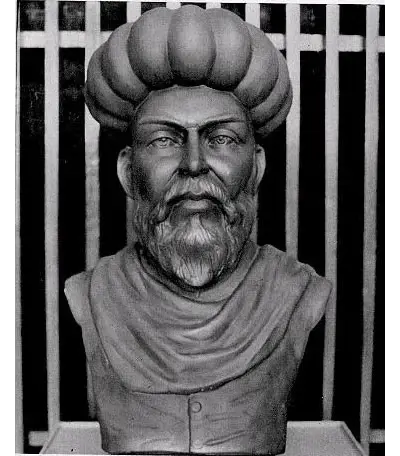
Ala-al-Din abu al-Hasan Ali ibn Abi-Hazm al-Qarshi al-Dimashqi (Arabic: علاء الدين أبو الحسن عليّ بن أبي حزم القرشي الدمشقي), known as Ibn al-Nafis (Arabic: ابن النفيس), was an Arab polymath whose areas of work included medicine, surgery, physiology, anatomy, biology, Islamic studies, jurisprudence, and philosophy. He is known for being the first to describe the pulmonary circulation of the blood. The work of Ibn al-Nafis regarding the right sided (pulmonary) circulation pre-dates the later work (1628) of William Harvey's De motu cordis. Both theories attempt to explain circulation. 2nd century Greek physician Galen's theory about the physiology of the circulatory system remained unchallenged until the works of Ibn al-Nafis, for which he has been described as "the father of circulatory physiology".
