Hichem Djait Quotes
I feel humiliated to belong to a state with no outlook for the future nor ambition, a state that is authoritarian if not despotic, in which there is neither science nor reason….This state holds me back.
Hichem Djait, Tunisian Historian & Writer, “Culture et politique dans le monde Arabe, Le Dabat, “Islam et Politique” (Special Issue) 1991
Sourced by: Eigen's Political and Historical Quotations


He was discussing the problem of negotiating with the Iranian government which was an unelected, dictatorial theocracy.

Referring to the autocratic President of Turkey, Recep Tayyip Erdogan.

The Center is in Holland. Chouket is Tunisian
The Center is in Holland. Chouket is Tunisian

Historically, most dictators have announced their worst intentions and in many cases were not believed by much of the world who then learned that they had made a serious error.


What is particularly interesting about this passage is that a Middle Eastern contemporary historian and commentator compared circumstances to political events with the Umayyads and the Abbisids to those in Persia and Rome. Chosroes (Khosrow) was a Persian King who had his brothers murdered, and Caesar was viewed as a tyrant. Even then, the history of politics, in one country influenced events and attitudes in others,


His views are a mix of modernism and fundamentalism. He favors democracy and elections but also favored the Taliban destroying the great ancient Buddha statues when he was called an idol worshipper for urging the preservation of art.

This is a very important quotation. It explains in great part, why there have been so few internal revolutions in Muslim countries. Al-Ghazi’s interpretation of Islamic Law and Theology concluded that even if the ruler is incompetent, corrupt, or destructive he should be supported and obeyed by all good Muslim citizens. The reason was that anarchy and/or chaos was an evil much worse for the Islamic community. There was one exception in the case of a ruler who was blasphemous or did not follow Islam. Then it was the duty of good Muslims. Since then, the ruler of an Islamic state, first seeks to ingratiated himself with the clergy. In Saudi Arabia, for example, the Royal Family gives enormous sums to all the clerics. They then urge dissidents and would be revolutionaries to accept the Royal Family with its flaws and shortcomings and accept their lack of freedom and human rights. And they tell all that the King and his family are all religious and support Islam. Therefore any revolt would be a tantamount to a sin. The Christian world had a different technique for inhibiting Revolution. Christian rulers claimed the Devine Right of Kings—that God had selected and ordained the king to lead. Regime change was contrary to the word of God. In a sense, the Islamic approach is more intellectually honest and seems to have worked much better than the Christians who have had so many revolutions. Better that is from the rulers point of view. From a democratic, Jeffersonian point of view revolting against an evil ruler was almost a moral obligation, and Al-Ghazali’s principle is all wrong and is keeping the Muslim countries from reaching democracy.

Soon he had the power of a dictator but he didn’t force his will on the vast majority of the Cubans. His decrees made all the wealthy and the cronies of the dictator Batista outraged and most of them left Cuba. He was a dynamic demagogue and the people handed him dictatorial powers which he did not reject. He was so popular that he was the only leader in the Americas who would give 4 hour speeches and move through the streets without any bodyguards until the United States and dissident expatriates tried to assassinate him. With all that popularity, none the less he would not allow open criticism of his regime and jailed many political opponents. So he indeed became a dictator but never needed the machine gun to maintain power.


The justice expanded upon the 18th century quotation of Manon Jeanne Roland, 1754-1793


This was written from Washington DC where slavery was legal at the time.
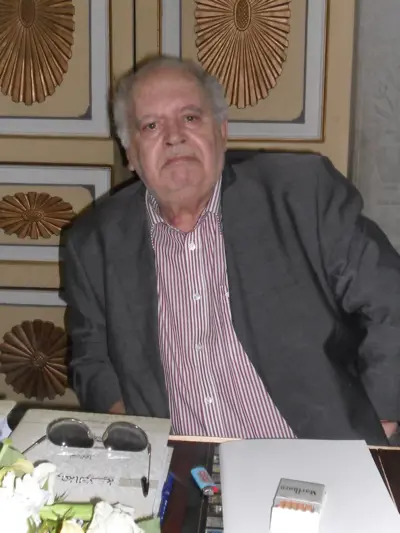
Hichem Djait (Arabic: هشام جعيط), is a prominent historian and scholar of Islam.
