Thomas Moore Quotes
Where bastard Freedom waves The fustian flag in mockery over slaves
This was written from Washington DC where slavery was legal at the time.
Thomas Moore, 1779-1852, Irish Poet, To the Lord Viscount Forbes
Sourced by: Eigen's Political and Historical Quotations

She was referring to the political leaders of the South who were patriots and slave owners.


He was making a generalization based on his historical study of nations and societies.


Hopkins was complaining about the fact that England could tax the colonies and thereby take their property without their consent made the American colonists in the “miserable condition of slaves.” Essentially the fundamental complaint of the Americans was this and in a decade it would erupt as the American Revolution. At the same time, Hopkins was a slave owner and yet saw nothing wrong with that.

_0_thumbnail_47x47.jpg)


Even before we had a Constitution there was major opposition to slavery. The “price” of the American Union was the acceptance of the slavery of the South. But the hypocrisy of a country based on liberty to allow and enforce slavery was not lost on the founding fathers. Ironically the abolitionists among the founding fathers were certain that they could persuade the Southern slaveholders of the error of slavery in a few years and things would be set right in the land. Even George Washington {630626}, and Thomas Jefferson and some other slaveowners at the time wished to see its abolition. Slaveholding Southern Founding Fathers in general were so wary of the abolitionists that they achieved structural, disproportionate, power in the new Constitution to ward off the abolitionists attempts to reform slavery.


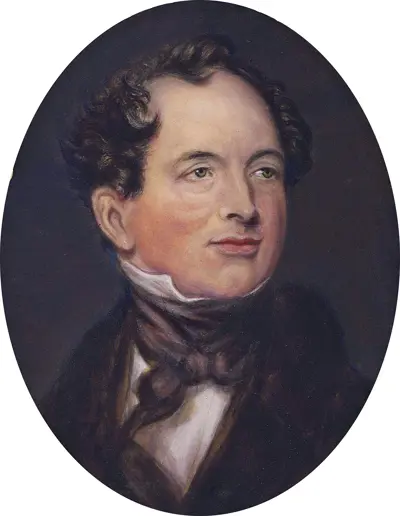
Thomas Moore was an Irish writer, poet and lyricist celebrated for his Irish Melodies. Their setting of English-language verse to old Irish tunes marked the transition in popular Irish culture from Irish to English. Politically, Moore was recognised in England as a press, or "squib", writer for the aristocratic Whigs; in Ireland he was accounted a Catholic patriot. Married to a Protestant actress and hailed as "Anacreon Moore" after the classical Greek composer of drinking songs and erotic verse, Moore did not profess religious piety. Yet in the controversies that surrounded Catholic Emancipation Moore was seen to defend the tradition of the Church in Ireland against both evangelising Protestants and uncompromising lay Catholics. Longer prose works reveal more radical sympathies. The Life and Death of Lord Edward Fitzgerald depicts the United Irish leader as a martyr in the cause of democratic reform. Complementing Maria Edgeworth's Castle Rackrent, Memoirs of Captain Rock is a saga, not of Anglo-Irish landowners, but of their exhausted tenants driven to the semi-insurrection of "Whiteboyism". Today, however, Moore is remembered almost alone either for his Irish Melodies (typically "The Minstrel Boy" and "The Last Rose of Summer") or, less generously, for the role he is thought to have played in the loss of the memoirs of his friend Lord Byron.
