Fidel Castro Quotes
I am not a dictator, and I do not think I will become one. I will not maintain power with a machine gun.
Soon he had the power of a dictator but he didn’t force his will on the vast majority of the Cubans. His decrees made all the wealthy and the cronies of the dictator Batista outraged and most of them left Cuba. He was a dynamic demagogue and the people handed him dictatorial powers which he did not reject. He was so popular that he was the only leader in the Americas who would give 4 hour speeches and move through the streets without any bodyguards until the United States and dissident expatriates tried to assassinate him. With all that popularity, none the less he would not allow open criticism of his regime and jailed many political opponents. So he indeed became a dictator but never needed the machine gun to maintain power.
Fidel Castro, Cuban Premier, I Won't Be a Dictator, interview with Ruth Lloyd, January 1959
Sourced by: Eigen's Political and Historical Quotations


At the time of this statement most people thought that Bush was joking. But by the end of his Presidency many looked back on the quote and thought that Bush had such preferences. He unilaterally took the country into the Iraq War and assumed Presidential Powers that no other president had ever attempted. Most serious, his administration actually took the formal legal position that the President did not have to obey the law if he unilaterally thought that it was not in the nation’s interest from the point of view of the Commander in Chief. So many debate whether this quotation was a light hearted joke of a harbinger of his real feelings about the Presidency.


Arguing the need to limit the power of the legislature:

Bartolo was the most famous legal expert of his day and for many years thereafter as he died at the age of 44—the height of his career. In Italy, Spain and other nations of Europe there were statutes passed that said if there was no precedent in Roman Law, the writings of Bartolo should dictate the law.


The Priest was the right wing demagogic radio host of his day. Virulently anti-Semitic and anti-Black, he was threatened with excommunication by the Catholic Church, which finally ordered him to cease us weekly radio show and stop the political hate.


With so many revolutionary rulers of new nations suppressing all opposition, the history of Ataturk and Turkey is unique. Ataturk was so popular and his People’s Party so successful that there was no opposition and Turkey had one party rule. However, Ataturk was determined to have Turkey become a parliamentary democracy as good as the Western nations of Europe. So a tradition of multi-party democracy was needed. So Ataturk actually went to his friend Fethi Okyar and asked him to start an opposition party and oppose the government. Fethi was a strong supporter of the revolution and generally was in concurrence with Ataturk and the People’s Party on everything. Ataturk however convinced him that they had to start a tradition that would take Turkey through the future, and he did create a new party-- Serbest Cumhuriyet Fırkası (Liberal Republican Party) and worked hard to find differences with the People’s Party and the Government. One immediate contribution was the oversight that the new party provided—a strong tradition that exists to this day in Turkey.

Eggleston was an accomplished writer who had served in the Confederate army of the Civil War. 20 year after the war he wrote a series of articles for the prestigious Northern Atlantic Monthly trying to convey the war from the Southerner’s point of view.

FDR was a marvelous judge of men and their character. De Gaulle could not separate himself from France and pushed the French Republic towards one man rule (himself) as much as anyone since Napoleon Bonaparte.

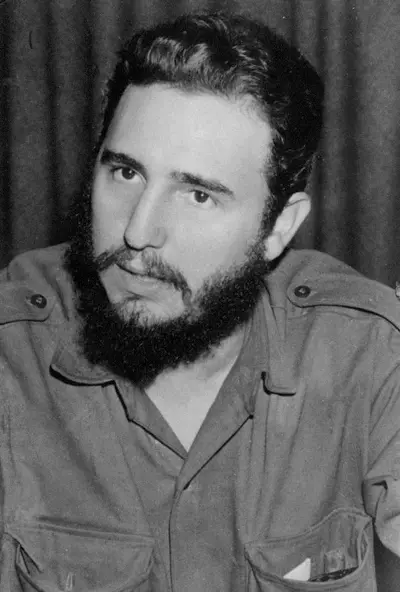
Fidel Alejandro Castro Ruz better known internationally as Fidel Castro, was a Cuban revolutionary and politician who served as Prime Minister of Cuba from 1959 to 1976 and President from 1976 to 2008. Ideologically a Marxist–Leninist and Cuban nationalist, he also served as the First Secretary of the Communist Party of Cuba from 1961 until 2011. Under his administration, Cuba became a one-party communist state; industry and business were nationalized, and state socialist reforms were implemented throughout society.
