Thomas Babington Macaulay Quotes
We do not think it necessary to prove that a quack medicine is poison. Let the vendor prove it to be sanitive.
1st Baron Macaulay. This issue is still debated in America. Until the latter part of the 20th century, businesses could sell supposed medicines without any proof of efficacy or safety. The Government or others had to prove that there was something wrong with the product. Then, that shifted, and the burden of proof fell on the developer and seller of medicines as Macaulay favored, but sellers of vitamins and dietary supplements were exempted and operated under the previous American (anti Macaulay) position. Ironically, political opponents of requiring the drug company to prove safety and efficacy claimed that this was a radical new, untested idea that would inhibit development of medicinals. They did not realize that 150 years earlier, this was a standard, accepted point of view in England. Even into the 21st century, America operated with the inconsistent difference between vitamins and supplements, many of which have no beneficial effect whatsoever, and medicines.
Thomas Babington Macaulay, 1800-1859, British Historian & Secretary of War (Liberal), Member of Parliament, June, 1829
Sourced by: Eigen's Political and Historical Quotations

Despite huge lobbying and political pressure, Dr. Kelsey would not sign off on the drug initially because she found information on her own about Thalidomide that the company, Merrell, must have known about and didn't reveal to her and her staff or in their applications. She was aware that the drug had been approved by England, Canada, and many nations of Europe, but she saw little data in the Merrell submissions and responses and that made her suspicious, and caused her to demand more. During the time the company was to submit more data, the reports of the deformed newborns were starting to come in from the countries that had approved the drug. When she gathered that information, she rejected the application and prevented thousands or perhaps tens of thousands of children to be born with missing limbs because their mothers had been treated with Thalidomide. In 1962 she was awarded the highest civilian medal by President John F. Kennedy.

There was no Federal regulation of food and drink then. Fast buck whisky purveyors would include all kinds of ingredients and processes, safe and sanitary or not. Many Americans died or became very sick from eating tainted food then. Even bad whisky had killed many. TR chose whisky as his example, because Congress was filled with heavy drinkers and whisky was then the favorite Congressional drink. Roosevelt, with these tactics got the first federal food regulatory laws passed over enourmous opposition, not unlike the fight over Obamacare which would take place a century later.


His antigovernment views were so extreme that he even opposed having the government control poisonous and other dangerous consumer products and instead leave it to the free market where the consumer would have to make safety decisions often without information or worse with deceptively false information.


This is one of the earliest examples of regulation for consumer protection. Later, the Magna Carta would incorporate the concept of standard weights and measures.

American’s were purchasing more and more of the medicines from Canada which had been doing a much better job of price controls on medicine that the United States had done. Some pharmaceutical companies were blackmailing the minister and Canada by threatening to limit the sales so that if Canadians exported drugs they might not have that drug for Canadian citizens.
A Pure Food bill had failed to pass the Congress for years until Roosevelt took up the cause. The modern federal role in the quality control of food products had its origins with TR.

In 1905 President Roosevelt supported a Pure Food act. Business interests opposed it with such arguments as:
Issuing a statement over the health threat of dioxin in 1983:


Glaxo issued Avandia a drug for diabetes, but the company began receiving reports of heart attacks and other cardio-vascular problems occurring with the drug. A team gathered the data and summarized it for the Senior Management. Drug companies are required by law to inform the FDA of any adverse data that they may know about relative to any of their drugs. Glaxo did not. Further, the Senior management ordered the data “suppressed” and it was so for a decade. Finally the e-mail was leaked to a Congressional Committee when there were other data coming in about the problems with Avandia. The FDA began a new review of the safety of Avandia, but the company had the profits for a decade. Some people had dead friends and relatives. It was generally thought that this sort of thing would never happen in an industry where all the companies are very substantial and a loss of income of any drug would not bankrupt the company, but more and more incidents began coming to light in the early 21st century.

Regulation had been adopted to make sure that certain products were made to standards and appropriate quality. A small fee was taken by the regulator to attest to the quality and place a seal on it. However, the system degenerated into a system where one had to pay the fee and everything passed inspection without regard for quality. Child was one of the first observers of the criticality of implementation of regulatory schemes and the danger that a regulatory system was vulnerable to corruption.
More than 20 years later, after unregulated finance enabled the Great Depression, Franklin Delano Roosevelt, finally got the Securities and Exchange Commission passed by Congress. By the beginning ot the 21st century

1st Earl of Beaconsfield. In the United States, President Theodore Roosevelt shocked the major business interests when he proposed regulating food and other government quality assurance of the private marketplace. Many Americans saw this as an overdue reform. One of the reasons was that Prime Minister Disraeli had advocated government regulation a quarter of a century earlier with statements like this quotation.

This quotation is notable as it shows that problems that are not dealt with in one generation can continue for generation after generation. Today we have the exact same problem with overly expensive drugs. In a capitalistic system, every business with good products and sales should make profits. But products that people need to say alive, most people think, should not make larger profit percentages than almost any other business. But this problem is over half a century old in America.


This scientific quotation is politically important because it defines the difficult problem of setting acceptable and safe environmental and work standards for air or water quality and contact with potentially toxic substances. As this quotation illustrates, everything is toxic if given in large enough doses. Table salt can kill a human if enough if ingested. Tiny amounts of even a poison will do no harm. What makes setting of standards still more complicated is that human beings differ in the amount of a substance it would take to produce a toxic reaction. Allergies are the best example, but the variability of sensitivity always exists.

The major killer diseases such as malaria and sleeping sickness are not contracted by Americans, and America is the only large country in the world where the Governments allow the drug companies to charge such high prices and make such huge profits. So any drug that Americans might pay for is a better potential profit generator than one that would be critical to the lives of millions where the governments to preserve lives would force the prices down or allow other companies to also make the drug. See {628648} for other factors affecting drug company priorities.
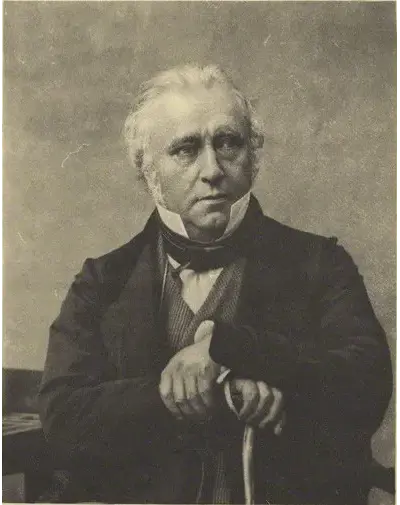
Thomas Babington Macaulay, 1st Baron Macaulay, FRS FRSE PC was a British historian and Whig politician. He wrote extensively as an essayist, on contemporary and historical sociopolitical subjects, and as a reviewer. His The History of England was a seminal and paradigmatic example of Whig historiography, and its literary style has remained an object of praise since its publication, including subsequent to the widespread condemnation of its historical contentions which became popular in the 20th century.
