FRANCIS KELSEY
(Francis Willey Kelsey)
Despite huge lobbying and political pressure, Dr. Kelsey would not sign off on the drug initially because she found information on her own about Thalidomide that the company, Merrell, must have known about and didn't reveal to her and her staff or in their applications. She was aware that the drug had been approved by England, Canada, and many nations of Europe, but she saw little data in the Merrell submissions and responses and that made her suspicious, and caused her to demand more. During the time the company was to submit more data, the reports of the deformed newborns were starting to come in from the countries that had approved the drug. When she gathered that information, she rejected the application and prevented thousands or perhaps tens of thousands of children to be born with missing limbs because their mothers had been treated with Thalidomide. In 1962 she was awarded the highest civilian medal by President John F. Kennedy.
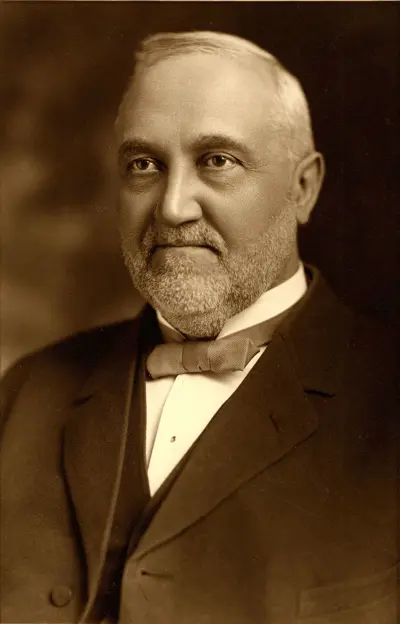
Francis Willey Kelsey was a classics scholar, professor, and archaeologist that would go on to lead the first expedition to the Near-East done by the University of Michigan (U of M). His papyrus findings and the collection of antiquities he acquired for the university brought him fame not only among University of Michigan faculty but around the world. Originally hailing from New York, he would teach at Lake Forest University, in Illinois, eventually coming to the University of Michigan. He was the secretary of the Archaeological Institute of America, Vice President, and eventually President, of the American Philological Association while he was at U of M.
