Francis Kelsey Quotes
I had the feeling after a meeting with company executives that they were at no time wholly frank with me, and this attitude has obtained in all our conferences, etc. regarding this drug.
Despite huge lobbying and political pressure, Dr. Kelsey would not sign off on the drug initially because she found information on her own about Thalidomide that the company, Merrell, must have known about and didn't reveal to her and her staff or in their applications. She was aware that the drug had been approved by England, Canada, and many nations of Europe, but she saw little data in the Merrell submissions and responses and that made her suspicious, and caused her to demand more. During the time the company was to submit more data, the reports of the deformed newborns were starting to come in from the countries that had approved the drug. When she gathered that information, she rejected the application and prevented thousands or perhaps tens of thousands of children to be born with missing limbs because their mothers had been treated with Thalidomide. In 1962 she was awarded the highest civilian medal by President John F. Kennedy.
Francis Kelsey, 1914-2015, Pharmacologist & Scientist, Director, Office of Scientific Investigations, U. S. Food & Drug AdministrationOfficial who prevented Thalidomide from being used in the U. S., Notes of her meetings with the manufacturers of Thalidomide who wanted FDA approval, 1961, Quoted in her obituary, The New York Times, August 6, 2015
Sourced by: Eigen's Political and Historical Quotations

1st Baron Macaulay. This issue is still debated in America. Until the latter part of the 20th century, businesses could sell supposed medicines without any proof of efficacy or safety. The Government or others had to prove that there was something wrong with the product. Then, that shifted, and the burden of proof fell on the developer and seller of medicines as Macaulay favored, but sellers of vitamins and dietary supplements were exempted and operated under the previous American (anti Macaulay) position. Ironically, political opponents of requiring the drug company to prove safety and efficacy claimed that this was a radical new, untested idea that would inhibit development of medicinals. They did not realize that 150 years earlier, this was a standard, accepted point of view in England. Even into the 21st century, America operated with the inconsistent difference between vitamins and supplements, many of which have no beneficial effect whatsoever, and medicines.


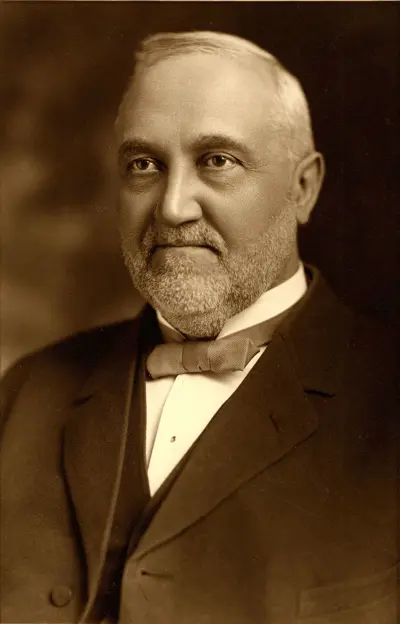
Francis Willey Kelsey was a classics scholar, professor, and archaeologist that would go on to lead the first expedition to the Near-East done by the University of Michigan (U of M). His papyrus findings and the collection of antiquities he acquired for the university brought him fame not only among University of Michigan faculty but around the world. Originally hailing from New York, he would teach at Lake Forest University, in Illinois, eventually coming to the University of Michigan. He was the secretary of the Archaeological Institute of America, Vice President, and eventually President, of the American Philological Association while he was at U of M.
