Oliver Wendell Holmes Jr. Quotes
Throw out opium ... throw out wine ... If the whole materia medica, as now used, could be sunk at the bottom of the sea, it would be all the better for mankind and all the worse for the fishes.
Oliver Wendell Holmes, 1809-1894, Author and Physician, Father of the Supreme Court Justice, Speech, Massachusetts Medical Society, May 30, 1860
Sourced by: Eigen's Political and Historical Quotations

It is not clear that Wright actually used these words of the first title or the editors created it. The substance is his and the second line is definitely his. At the time, the average American mistakenly thought that China had a much higher consumption rate.


This pledge was taken by over half a million Americans in Mathew's 1849-1851 tour of the United States promoting the Teetotal Abstinence Society.


Watchtower Bible and Tract Society of New York. Alcohol is medically and scientifically a drug and an addicting drug at that. The Jehovah's Witnesses also shun alcohol for that reason.

An Aborigine herself, she had co-authored a major study of 45 aboriginal communities of Australia’s vast Northern Territory—the alcohol abuse was so great that young pre teen girls were trading sex for alcohol, parents in large numbers were too drunk to care for children. Few children attended school. Many were physically abused. The Government responded by attempting to ban alcohol in the aboriginal communities and withholding government welfare payments from parents who would not send their children to school. At the time there were 470,000 aborigines in Australia’s 20 million population.

It is not clear whether Fish actually believed what he was saying or was using extreme hyperbole for the purposes of passing an act he favored. This type of statement made by otherwise respectable government officials has developed a view on the part of many Americans that the Government lies about marijuana. See {593333} and {593334} for other examples.

Not only were there many opium users in the Philippines, but many of our occupying soldiers were introduced to opium and some became addicted. In that sense, it was like the Vietnam War.

He was the first Chinese official to make opium illegal. However, British many merchants were involved in a complicated trade scheme whereby they brought opium to Canton. They paid not attention to the new laws against opium the same as their Chinese customers. Lin Zexu, perceiving Queen Victoria to have powers equivalent to the Chinese Emperor who could do anything in China, He assumed that the Queen could and would control the merchant’s behavior, and before punishing the British merchants, he was putting the Queen on notice. There is no record of what Victoria did, if anything. When Lin Zexu tried to enforce his ban on opium, the British Merchants resisted and the First Opium War broke out between China and Britainin which the Chinese were humiliated and resent to this day. A bronze statue of Lin Zexu was erected in his honor in Chatham Square (Kimlau Square) of New York City's Chinatown.


Rush felt that the American public needed to be made aware of the health hazards inherent in alcohol consumption.


Actually, The Surgeon General has explained that alcohol has been the most violence-inducing drug. There is no evidence whatsoever that marijuana causes violence.

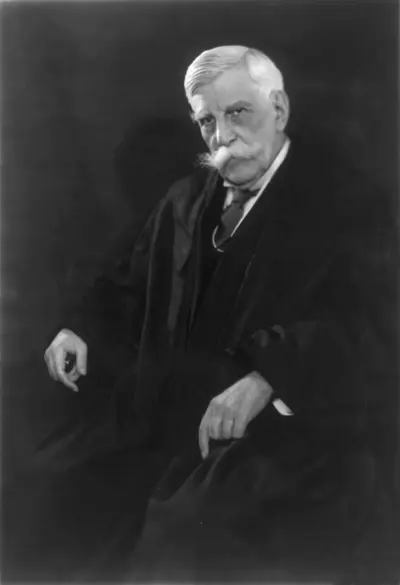
Oliver Wendell Holmes Jr. was an American jurist who served as an Associate Justice of the Supreme Court of the United States from 1902 to 1932. Noted for his long service, concise and pithy opinions, and deference to the decisions of elected legislatures, he is one of the most widely cited United States Supreme Court justices in history, particularly for opinions on civil liberties and American constitutional democracy, and is one of the most influential American common law judges, honored during his lifetime in Great Britain as well as the United States. Holmes retired from the court at the age of 90, an unbeaten record for oldest justice in the federal Supreme Court (although John Paul Stevens was only 8 months younger when he retired on April 12, 2010). He previously served as an Associate Justice and as Chief Justice of the Massachusetts Supreme Judicial Court, and was Weld Professor of Law at his alma mater, Harvard Law School.
