Byron White Quotes
While the collateral consequences of drugs such as cocaine are indisputably severe, they are not unlike those which flow from the misuse of other, legal, substances
Byron R. White, 1917–2002, U. S. Supreme Court Justice, Dissent, Harmelin v. Michigan 501 U.S. 957 at 1023, 1991
Sourced by: Eigen's Political and Historical Quotations


The reason that this is a noteworthy quotation is that it illustrates a problem of alcohol and other drug prevention. Specifically, the “fact” that is the message of the billboard is not correct and exaggerates the danger. The general problem is well-intentioned but inaccurate and misleading information provided to the public. When the public, especially young people, discover that the government or the other organization urging the public to eschew drugs is not telling the truth, they not only tend of disbelieve all anti-drug messages and believe that the warnings given are just part of politics or prudish elements of the society. In this case, many young people and adults have seen or know people who were heroin addicts and are no longer. They are not hooked for life. Worse, a single dosage of heroin does not per se inevitably cause addiction. There have been people who used heroin once, continued to use and became addicts. But there are many more who have tried heroin once or twice who did not become addicted. The real risk is that if someone tries heroin once, he/she may become one of those who goes on and gets hooked. The billboard message is “WILL” and the truth is “MAY”.


Explaining why he wants alcohol-ad warnings in all alcohol ads:


Watchtower Bible and Tract Society of New York. Alcohol is medically and scientifically a drug and an addicting drug at that. The Jehovah's Witnesses also shun alcohol for that reason.


It is not clear that Wright actually used these words of the first title or the editors created it. The substance is his and the second line is definitely his. At the time, the average American mistakenly thought that China had a much higher consumption rate.
Not only were there many opium users in the Philippines, but many of our occupying soldiers were introduced to opium and some became addicted. In that sense, it was like the Vietnam War.

One of the commonalities between Lincoln and Washington were there experience in seeing alcohol cause the death and/or ruination of many. See {630833}.

When Washington was younger and running for the colonial Virginia assembly, he bought beer and rum for all the voters in his precinct. He did not then realize the damage that alcohol can do. One of the commonalities between Lincoln and Washington were their experience in seeing alcohol cause the death and/or ruination of many. See {630832}.


Ford had a very serious case of alcoholism. This led him to offer a very original, but not very effective public defense of his using crack cocaine—namely that he was too drunk to know what he was doing.
Cixi had issued a 10 point edict designed to end opium use in China. One of its most interesting elements was that it only applied to Chinese under the age of 60. She recognized that for those elderly people who are thoroughly addicted to opium, prohibition would be to radical a change and their life expectancy was not very long. At the time, the average lifespan of Chinese was under 50.


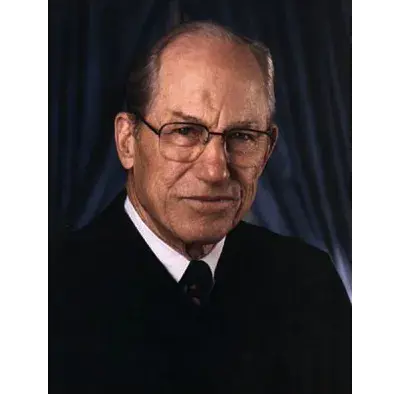
Byron Raymond "Whizzer" White was an American lawyer and professional football player who served as an Associate Justice of the Supreme Court of the United States from 1962 to 1993. Born and raised in Colorado, he played college football, basketball, and baseball for the University of Colorado, finishing as the runner up for the Heisman Trophy in 1937. He was selected in the first round of the 1938 NFL Draft by the Pittsburgh Pirates and led the National Football League in rushing yards in his rookie season. White was admitted to Yale Law School in 1939 and played for the Detroit Lions in the 1940 and 1941 seasons while still attending law school. During World War II, he served as an intelligence officer with the United States Navy in the Pacific Theatre. After the war, he graduated from Yale and clerked for Chief Justice Fred M. Vinson.
