Hamilton Wright Quotes
We found that we had captured, with the Philippines, an opium problem
Not only were there many opium users in the Philippines, but many of our occupying soldiers were introduced to opium and some became addicted. In that sense, it was like the Vietnam War.
Hamilton Wright, 1867-*, Opium Commissioner, Department of State, Quoted in New York Times, March 12, 1911
Sourced by: Eigen's Political and Historical Quotations

It is not clear that Wright actually used these words of the first title or the editors created it. The substance is his and the second line is definitely his. At the time, the average American mistakenly thought that China had a much higher consumption rate.

He was the first Chinese official to make opium illegal. However, British many merchants were involved in a complicated trade scheme whereby they brought opium to Canton. They paid not attention to the new laws against opium the same as their Chinese customers. Lin Zexu, perceiving Queen Victoria to have powers equivalent to the Chinese Emperor who could do anything in China, He assumed that the Queen could and would control the merchant’s behavior, and before punishing the British merchants, he was putting the Queen on notice. There is no record of what Victoria did, if anything. When Lin Zexu tried to enforce his ban on opium, the British Merchants resisted and the First Opium War broke out between China and Britainin which the Chinese were humiliated and resent to this day. A bronze statue of Lin Zexu was erected in his honor in Chatham Square (Kimlau Square) of New York City's Chinatown.

Rangel said this sarcastically to Lindsay, who wanted to do an experiment legalizing heroin. As Rangel described it, Lindsay said the heroin would be legal only for addicted adults and the experiment would be done only in a couple of places to test it.


British merchants and the East India Company made huge profits from the drug trade buying opium in India and selling it to China where it had become immensely popular. But when the Chinese (led by Lin Zexu) tried to ban the import of opium, the British fought two wars with China to force the reopening of the opium trade. At the end of the 20th century, some referred to England and the English Crown as the largest Drug Cartel in history.

Cixi had issued a 10 point edict designed to end opium use in China. One of its most interesting elements was that it only applied to Chinese under the age of 60. She recognized that for those elderly people who are thoroughly addicted to opium, prohibition would be to radical a change and their life expectancy was not very long. At the time, the average lifespan of Chinese was under 50.


The main feature of this law was to establish a very small tax on opiates. The tax was not significant as a revenue source, but was meant to make public that which had been a clandestine activity and also reduce the promotion of sales. Users had to fill out special Treasury Department forms to order their drugs, and none could be delivered to anyone who did not order on the special forms.


The reason that this is a noteworthy quotation is that it illustrates a problem of alcohol and other drug prevention. Specifically, the “fact” that is the message of the billboard is not correct and exaggerates the danger. The general problem is well-intentioned but inaccurate and misleading information provided to the public. When the public, especially young people, discover that the government or the other organization urging the public to eschew drugs is not telling the truth, they not only tend of disbelieve all anti-drug messages and believe that the warnings given are just part of politics or prudish elements of the society. In this case, many young people and adults have seen or know people who were heroin addicts and are no longer. They are not hooked for life. Worse, a single dosage of heroin does not per se inevitably cause addiction. There have been people who used heroin once, continued to use and became addicts. But there are many more who have tried heroin once or twice who did not become addicted. The real risk is that if someone tries heroin once, he/she may become one of those who goes on and gets hooked. The billboard message is “WILL” and the truth is “MAY”.

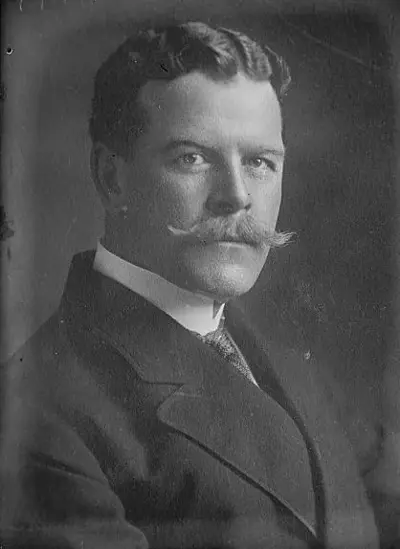
Hamilton Kemp Wright was an American physician and pathologist who served as the United States Opium Commissioner.
