William Randolph Hearst Quotes
No nation alone, however great its vigilance, can erect a barrier high enough to keep out narcotics when opium is grown or drugs are manufactured without limitation or restriction. The nations of the world must be aroused to cooperate.
William Randolph Hearst, 1863-1951, U.S. Congressman (Democrat, NY), Founder, Independence League Party, Journalist and publisher, Quoted in Older, William Randolph Hearst: American, Appleton Century, 1936
Sourced by: Eigen's Political and Historical Quotations


He was the first Chinese official to make opium illegal. However, British many merchants were involved in a complicated trade scheme whereby they brought opium to Canton. They paid not attention to the new laws against opium the same as their Chinese customers. Lin Zexu, perceiving Queen Victoria to have powers equivalent to the Chinese Emperor who could do anything in China, He assumed that the Queen could and would control the merchant’s behavior, and before punishing the British merchants, he was putting the Queen on notice. There is no record of what Victoria did, if anything. When Lin Zexu tried to enforce his ban on opium, the British Merchants resisted and the First Opium War broke out between China and Britainin which the Chinese were humiliated and resent to this day. A bronze statue of Lin Zexu was erected in his honor in Chatham Square (Kimlau Square) of New York City's Chinatown.
British merchants and the East India Company made huge profits from the drug trade buying opium in India and selling it to China where it had become immensely popular. But when the Chinese (led by Lin Zexu) tried to ban the import of opium, the British fought two wars with China to force the reopening of the opium trade. At the end of the 20th century, some referred to England and the English Crown as the largest Drug Cartel in history.


Not only were there many opium users in the Philippines, but many of our occupying soldiers were introduced to opium and some became addicted. In that sense, it was like the Vietnam War.

“Tomans” were a quantity of money.
Cixi had issued a 10 point edict designed to end opium use in China. One of its most interesting elements was that it only applied to Chinese under the age of 60. She recognized that for those elderly people who are thoroughly addicted to opium, prohibition would be to radical a change and their life expectancy was not very long. At the time, the average lifespan of Chinese was under 50.


The main feature of this law was to establish a very small tax on opiates. The tax was not significant as a revenue source, but was meant to make public that which had been a clandestine activity and also reduce the promotion of sales. Users had to fill out special Treasury Department forms to order their drugs, and none could be delivered to anyone who did not order on the special forms.
It is not clear that Wright actually used these words of the first title or the editors created it. The substance is his and the second line is definitely his. At the time, the average American mistakenly thought that China had a much higher consumption rate.

There was an international conference on the worldwide drug problem.


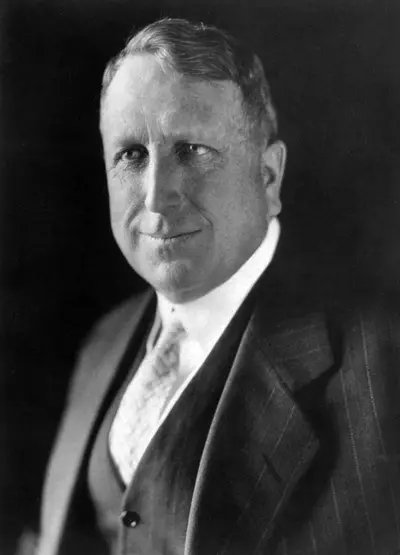
William Randolph Hearst Sr. was an American businessman, newspaper publisher, and politician known for developing the nation's largest newspaper chain and media company, Hearst Communications. His flamboyant methods of yellow journalism influenced the nation's popular media by emphasizing sensationalism and human interest stories. Hearst entered the publishing business in 1887 with Mitchell Trubitt after being given control of The San Francisco Examiner by his wealthy father, Senator George Hearst.
