Lin Zexu Quotes
Your Majesty has not before been thus officially notified, and you may plead ignorance of the severity of our laws, but I now give my assurance that we mean to cut this harmful drug forever.
He was the first Chinese official to make opium illegal. However, British many merchants were involved in a complicated trade scheme whereby they brought opium to Canton. They paid not attention to the new laws against opium the same as their Chinese customers. Lin Zexu, perceiving Queen Victoria to have powers equivalent to the Chinese Emperor who could do anything in China, He assumed that the Queen could and would control the merchant’s behavior, and before punishing the British merchants, he was putting the Queen on notice. There is no record of what Victoria did, if anything. When Lin Zexu tried to enforce his ban on opium, the British Merchants resisted and the First Opium War broke out between China and Britainin which the Chinese were humiliated and resent to this day. A bronze statue of Lin Zexu was erected in his honor in Chatham Square (Kimlau Square) of New York City's Chinatown.
Lin Zexu, 1785–1850, Chinese Scholar & Imperial Commissioner of Guangdong, Governor-General of Shaanxi-Gansu, Letter to Queen Victoria, 1839
Sourced by: Eigen's Political and Historical Quotations

British merchants and the East India Company made huge profits from the drug trade buying opium in India and selling it to China where it had become immensely popular. But when the Chinese (led by Lin Zexu) tried to ban the import of opium, the British fought two wars with China to force the reopening of the opium trade. At the end of the 20th century, some referred to England and the English Crown as the largest Drug Cartel in history.

It is not clear that Wright actually used these words of the first title or the editors created it. The substance is his and the second line is definitely his. At the time, the average American mistakenly thought that China had a much higher consumption rate.

Cixi had issued a 10 point edict designed to end opium use in China. One of its most interesting elements was that it only applied to Chinese under the age of 60. She recognized that for those elderly people who are thoroughly addicted to opium, prohibition would be to radical a change and their life expectancy was not very long. At the time, the average lifespan of Chinese was under 50.


Not only were there many opium users in the Philippines, but many of our occupying soldiers were introduced to opium and some became addicted. In that sense, it was like the Vietnam War.


Opium addiction was ravaging Chinese society and the British were very large opium traders with most of the Chinese market. The moral and ethical argument fell on deaf ears and the British continued to sell opium to China. While it is hard to understand the British position today, consider the export sales of American cigarettes to the third world. A few countries have tried to legislate limits and restrictions and our State Department has kept all these markets open by threatening to restrict sales to the U. S. from those countries. The “logic” is that if the U. S. stopped exporting cigarettes, then the French or other country would move into the market or the local businesses would take over the cigarette trade. And cigarettes are far more lethal than opium. The British businessmen were convinced that there would be no reduction of use—the only difference would be who profits from the opium. A few years later the Opium Wars ensued.
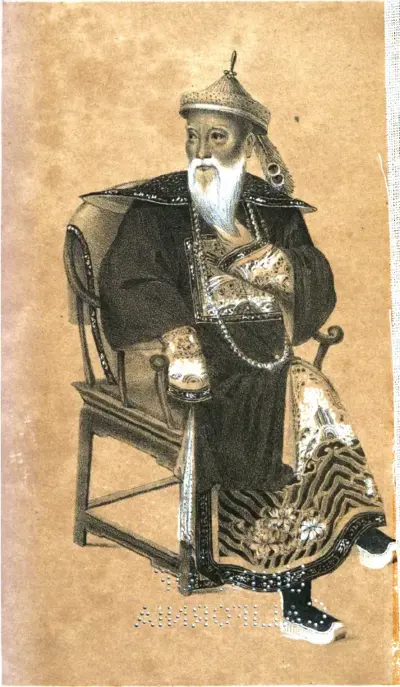
Lin Zexu, courtesy name Yuanfu, was a Chinese head of states (Viceroy), Governor General, scholar-official under Emperor of the Qing dynasty best known for his role in the First Opium War of 1839–42. He was from Fuzhou, Fujian Province. Lin's forceful opposition to the opium trade was a primary catalyst for the First Opium War. He is praised for his constant position on the "moral high ground" in his fight, but he is also blamed for a rigid approach which failed to account for the domestic and international complexities of the problem. The Daoguang Emperor endorsed the hardline policies and anti-drugs movement advocated by Lin, but then blamed Lin for the resulting disastrous war.
