Josiah Child Quotes
In England the attempts which our fore-fathers made for Regulating of Manufactures, when left to the Execution of some particular person, in a short time resolved but into a Tax upon the Commodity, without respect to the goodness thereof … a Seal was invented, as a signal that the Commodity was made according to the Statutes, which Seals it is said, may now be bought by Thousands, and put upon what the Buyers please.
Regulation had been adopted to make sure that certain products were made to standards and appropriate quality. A small fee was taken by the regulator to attest to the quality and place a seal on it. However, the system degenerated into a system where one had to pay the fee and everything passed inspection without regard for quality. Child was one of the first observers of the criticality of implementation of regulatory schemes and the danger that a regulatory system was vulnerable to corruption.
Josiah Child, 1630-1699, English Governor of the East India Company, Brief Observations Concerning Trade and Interest of Money, 1668
Sourced by: Eigen's Political and Historical Quotations

This is one of the earliest examples of regulation for consumer protection. Later, the Magna Carta would incorporate the concept of standard weights and measures.
The Grammar Curmudgeon


Sealed under duress and later repudiated by the King with Papal assistance


He was referring to Fannie Mae, the government-created. private mortage guarantee company. It was heavily regulated, and in general it met the regulatory requirements. However, the requirements were insufficient, and in the 2008 Meltdown and the Great Recession that followed, Fannie Mae itself was in such bad financial condition, that the Federal Government had bail them out or have the entire home mortgage industry fall apart.


This was a very important quotation because Cox was a strong advocate of deregulation and voluntary regulation, and that is why he was appointed to head the SEC by George W. Bush. He was the leading Republican expert on Regulation of the Stock Markets and sale of public securities. However when the Meltdown of 2008 hit, it was clear to all but the extreme ideologues that some Federal regulation was necessary. Nonetheless, it took several years to reform the regulations for the financial industry with the Banks and Wall Street fighting it all the way and by that time the Republican Party had been so dominated by ideological conservatives that the views of Cox and others no longer had much influence. They fought the Dodd-Frank reforms to go preserve self regulation to a great extent.
Modern finance is so complex and convoluted, that any laws or regulations that government makes are quickly evaded by even more complex and convoluted schemes which the legislators and regulators have to try and control. By the time they learn and understand and finally develop measures to regulate those, the cycle starts again. Hence the “fool’s errand”

The Dodd Frank bill was designed, in the aftermath of the large bank induced meltdown of 2008 and the Great Recession, to regulate the banking industry so that no bank would be “too big to fail”. However, although the bill placed many restrictions on the banks to prevent much of their risky economic behavior, which the banks complained inhibited their growth and profitability. However, the bill did not put any limits on the size of the large banks and their critical proportion of the U. S. Financial System. If a bank was large enough, the government did not dare allow the bank to fail regardless of how profligate the Bank had been with its depositors’ money. So the shareholders made big money from the Bank’s risky behavior if it turned out well, and if not the taxpayers had to bail the banks out, because they were too big to fail without causing much of the rest of the country to also fail. Warren and others wanted a simple solution. Break up the large banks into smaller ones and then if any one of the small units makes poor investments, the bank could fail and other than its shareholders and creditors, the effect would not be so serious that the government could not allow the bank to go into bankruptcy. Mismanaged banks could fail like other mismanaged companies and not take down much or the rest of the country with them. But the banks lobbied to prevent that, and by 2014, 6 years after the taxpayers had to bail out banks that were too big to fail, many of the banks were twice as large as they were when they were already too big to fail.
the administration’s plan to regulate the industry Taft was actually the Secretary of War when he gave this speech. However, President Theodore Roosevelt used him as his “Assistant President” to run things in his absence and help with policy making and implementing major reforms. The President had decided to aggressively push for railroad regulation to end the rate rebate abuses that were used to support the monopolies like Standard oil. He had initiated the campaign by personally speaking to the Railroad Owners and Corporate Magnates—{640489}. Then he dispatched Taft to address the Railroad Executives of the Nation. This led to the first American regulation of the Railroads.
One of the major problems with marijuana was that since it was illegal, the supply was not regulate. One result was that there was no labeling and the consumer had no idea of the strength of the active ingredient (THC) and could not monitor his/her dosage. At the time of this quotation, the state of Colorado had just legalized the selling of marijuana but required that all marijuana sold carry labels which inform the consumer just how much THC he/she would be taking.
Those greedy airplane, bus, and train operators who do not follow all the safety rules and make the investments in safety undercut the prices of the responsible operators that do. Therefore she placed great emphasis on getting the bad ones out of business. However Congress would only grant limited powers and limited budget for inspection and regulation to the Federal agencies responsible.

At the beginning of the dispute between America and England, the issue was the raising of internal American taxes by Parliament without any American representation in Parliament. The issue escalated and when the British began using force, independence then became the American objective.
_0_thumbnail_47x47.jpg "Steven Brill (born August 22, 1950) is an American lawyer and journalist-entrepreneur. Brill's most recent reporting and book is concerned with healthcare costs.")
There are 207,000 procurement personnel in the government who are required to follow the 1,600 page FAR (Federal Acquisition Regulations) guidelines and, in the case of the DoD, the 1,600+ page D-FARS overlay to the FAR covering military contracting.

She was then the European Commissioner for Competition.
She was then the European Commissioner for Competition.


The Commission is not a law enforcement agency in the sense that it can initiate or prosecute a civil or criminal lawsuit against a party that is breaking the law. The Commission however, can refer cases to the Justice Department and turn over their findings with a recommendation to prosecute. However, under George W. Bush, the policy was not to even do that. Chairman Majoras actually persuaded the Bush Justice Department to terminate efforts to prosecute Intel and other companies that previous Commissions had recommended prosecuting.

1st Baron Macaulay. This issue is still debated in America. Until the latter part of the 20th century, businesses could sell supposed medicines without any proof of efficacy or safety. The Government or others had to prove that there was something wrong with the product. Then, that shifted, and the burden of proof fell on the developer and seller of medicines as Macaulay favored, but sellers of vitamins and dietary supplements were exempted and operated under the previous American (anti Macaulay) position. Ironically, political opponents of requiring the drug company to prove safety and efficacy claimed that this was a radical new, untested idea that would inhibit development of medicinals. They did not realize that 150 years earlier, this was a standard, accepted point of view in England. Even into the 21st century, America operated with the inconsistent difference between vitamins and supplements, many of which have no beneficial effect whatsoever, and medicines.
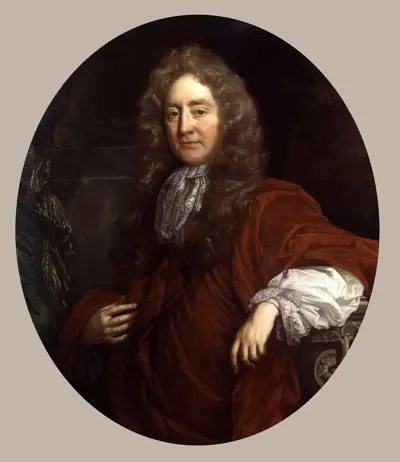
Sir Josiah Child, 1st Baronet, MP, was an English economist, merchant and politician. He was an economist proponent of mercantilism and governor of the East India Company. He led the company in the Anglo-Mughal War.
