Edward Grey Quotes
We are going to suffer, I am afraid, terribly in this war, whether we are in it or whether we stand aside. Foreign trade is going to stop, not because the trade routes are closed, but because there is no trade at the other end. Continental nations engaged in war all their populations, all their energies, all their wealth, engaged in a desperate struggle they cannot carry on the trade with us that they are carrying on in times of peace, whether we are parties to the war or whether we are not.
1st Viscount Grey of Fallodon
Edward Grey, 1862-1933, British Foreign Secretary, Ambassador to the United States, Liberal Party Leader, Speech at the Eve of WWI, August 3, 1914
Sourced by: Eigen's Political and Historical Quotations

The Ambassador of Bavaria represented an area where the politicians saw democrats and socialists as their great enemy, as did many of the leading right wing conservatives in all of Germany. They believed that a great war would give them a chance to crush democratic socialism in Europe. Bethmann warned that just the opposite might result, and indeed it did. He was correct. Many of the crowned heads of Europe were deposed and the democratic socialists emerged as a major political factor in the victorious democracies. Bethmann-Hollweg, however, was not a strong leader and could not prevent the Conservatives, the military leaders, and Kaiser Wilhelm from initiating WWI.


There were some British politicians who had considered the possibility of supporting the South in the Civil War to assure their supply of cheap cotton. Entering the war by allying with the Confederacy was also a possibility. Lincoln used this phrase and instructed Adams to use that with the British politicians as the result if England get involved with the American Civil war. It is the closest phrase to “World War” until WWI.

There was some fear in the North that the shots fired by the Southern rebels, might encourage one or more of the European Powers to start a war with the United States. And if the Rebellion turned into a full scale Civil War, the South would surely encourage such acts be promising trade concessions in the export of Southern cotton. Seward’s confident and bellicose statement distressed some Union colleagues who feared that Seward might anger and provoke one of more of the machismo and nationalistic European Powers. However, if Seward was bluffing, the bluff worked. No country encroached on American interests during the Civil War. If he was not bluffing, he certainly, along with many others, understated the difficulty that the North would have putting down the Southern rebellion.


The British had sent troops to Iraq expecting to be greeted by a grateful population who would then obtain relief from the warring factions which had destabilized the area. However, in a historical precursor to the George W. Bush invasion of Iraq, the British troops became the targets for all sides in the complex power struggle of the area. Hence Churchill’s description as an “ungrateful volcano”. At the time, the oil of Iraq had not been discovered and England was the world’s largest superpower.

He was writing about the impending First World War.

Giving his analysis of the start of World War I:


See the American ambassador’s assessment after the war began {41089}


Almost all economists believe that Harding had it totally wrong. WWII for example was one of the greatest increases in productivity in world history. The Civil War and the two world wars both were accompanied by many increases in industrial productivity. The losing side is usually totally devastated by war, and sometimes the winners are impoverished as with England and Russia in WWII. However, the North thrived in the Civil War and America did in WWII. Many economists say that war often impairs the economy of even a winning country in that the war expenditures generally are made at the expense of the civilian economy—infrastructure, public transportation, education, and in the decades following the war the lack of domestic investment in the war years reduces medium and long term growth.


German ally, the Austro-Hungarian Empire had declared war on Serbia. See {642085}. The Russian Czar was under great pressure because a large Roman Catholic Empire was warring against a small Orthodox co-religionist of Russia and Russians of all classes wanted Russia to defend Serbia. The Czar was making a good faith effort to stave off the war. What he did not realize was that Germany had actually planned for war against Russia and France and was using the alliance with Austria as an excuse.
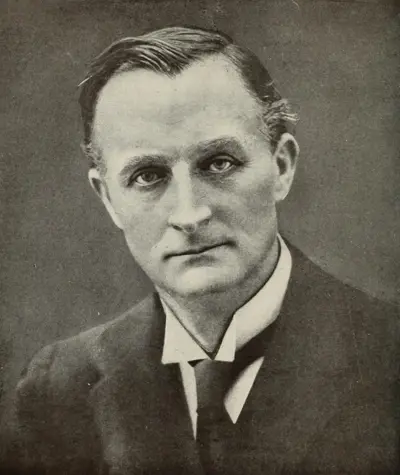
Edward Grey, 1st Viscount Grey of Fallodon, KG, PC, DL, FZS, better known as Sir Edward Grey, was a British Liberal statesman and the main force behind British foreign policy in the era of the First World War.
