Stephen Spender Quotes
The immediate reaction of the poets who fought in the war was cynicism... The war dramatized for them the contrast between the still-idealistic young, living and dying on the unalteringly horrible stage-set of the Western front, with the complacency of the old at home, the staff officers behind the lines. In England there was violent anti-German feeling; but for the poet-soldiers the men in the trenches on both sides seemed united in pacific feelings and hatred of those at home who had sent them out to kill each other.
Stephen Spender, 1909–1995, English poet and essayist, The Struggle of the Modern, 1963
Sourced by: Eigen's Political and Historical Quotations


George was referring to the brutal realities of war (during the First World War).


Berger was actually prosecuted, convicted, and sentenced to 20 years in prison, for this editorial. The House refused to seat him after the 1918 election (see {587981}); his constituents re-elected him in 1920 anyway. Finally the Supreme Court overturned his conviction, and he was again seated in Congress.

stating that war was obsolete See {640087} for the quotation of exactly what Angell wrote.


The suffragette movement was split by WWI and the issue of pacicism. See {621265} for the pro war factional view.


This has been true in just about every conflict. In WWII however, there were a highly disproportionate ration of atrocities with those of the axis forces dwarfing those of the U. S. and its allies. Further, after the war, those allied atrocities that did take place were published. In addition, one basic difference is in the policies of the fighting forces and their governments as opposed to individual actions by soldiers. In WWII, the allied atrocities were of the latter type, but the axis atrocities involved both.
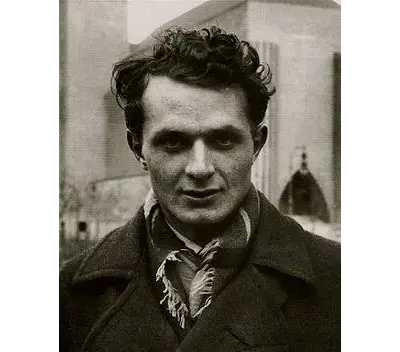
Sir Stephen Harold Spender CBE was an English poet, novelist and essayist whose work concentrated on themes of social injustice and the class struggle. He was appointed Poet Laureate Consultant in Poetry to the United States Library of Congress in 1965.
