VICTOR L. BERGER
(Victor Luitpold Berger)
In 1924 Berger was the only Socialist Party congressman, but New York's Fiorello La Guardia, who had been denied the Republican renomination, won reelection as an Independent. The House clerk incorrectly listed La Guardia as a Socialist, and Berger jokingly referred to him as:
“Profiteers” had two general meanings at the time: First there was the specific set of industrialists who had made large profits out of the First World War. For many it also included capitalists who made large profits.
Berger was actually prosecuted, convicted, and sentenced to 20 years in prison, for this editorial. The House refused to seat him after the 1918 election (see {587981}); his constituents re-elected him in 1920 anyway. Finally the Supreme Court overturned his conviction, and he was again seated in Congress.
Debs said he would seize them. The two views represent the classic left wing debate over whether nationalized property should just be seized or should far compensation be given. In countries like Cuba of the 1970s, factor owners who stayed and ran their factories under national control received compensation after time but those who left never did which is a type of middle ground.
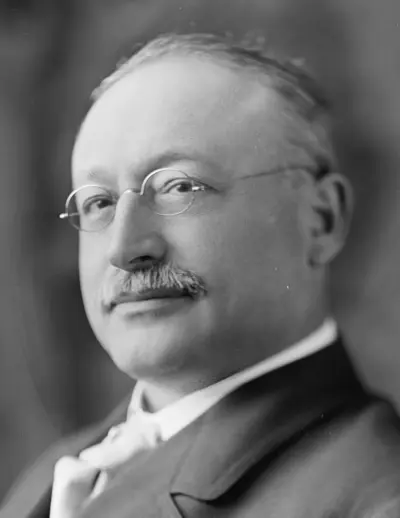
Victor Luitpold Berger was an Austrian-American socialist politician and journalist who was a founding member of the Social Democratic Party of America and its successor, the Socialist Party of America. Born in Austria-Hungary, Berger immigrated to the United States as a young man and became an important and influential socialist journalist in Wisconsin. He helped establish the so-called Sewer Socialist movement. Also a politician, in 1910, he was elected as the first Socialist to the U.S. House of Representatives, representing a district in Milwaukee, Wisconsin.
