Victor L. Berger Quotes
No you wouldn’t. Not if I were there … It is my party as much as yours, and I answer that we should offer to pay.
Debs said he would seize them. The two views represent the classic left wing debate over whether nationalized property should just be seized or should far compensation be given. In countries like Cuba of the 1970s, factor owners who stayed and ran their factories under national control received compensation after time but those who left never did which is a type of middle ground.
Victor L. Berger, 1860-1929, U. S. Congressman (Socialist, WI), Contradiction to Socialist Party Leader, Eugene Debs, who had been asked if the Socialists came to power, what they would do about the trusts and monopolies, Interview with Lincoln Steffans, 1912
Sourced by: Eigen's Political and Historical Quotations


Whithead’s view which seems intuitively right to most citizens, tends to be the one that the majority espouses but the minority opposes. At the time, the Republicans controlled the White House and there were a number of polarizing issues, where the Republicans could not obtain consensus and then decided. However, then the Democrats gained control of the White House and Congress the next year, it was the Democrats who claimed that they had to decide. The Republicans, now in the majority, argued that significant changes in America should not be made by narrow majorities and major issues should be tabled if there was no substantial majority. That was the position that the Democrats had espoused when they were in the minority.
Ataturk, the great Turkish reformer, was interested in Turkish independence, development, and reform, but was uninterested in the day-to-day administration of government. He knew it had to be done and wanted his friend to be Prime Minister and run the government. Orbay realized that Ataturk would still be the major power in the nation.

The Romans had experimented with two leaders where each day command shifted from one to the other. It did not work very well and was not continued. Instead the Western world has moved toward a singular leader with very limited powers and many checks and balances plus the possibility of removal.


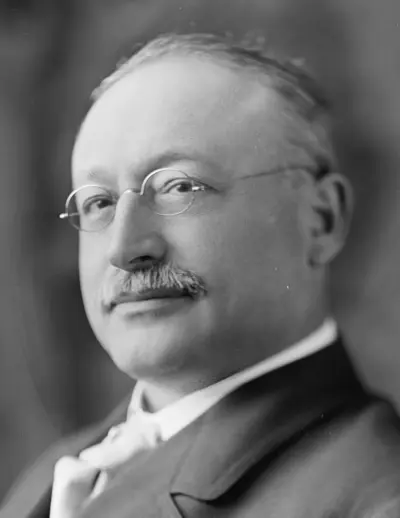
Victor Luitpold Berger was an Austrian-American socialist politician and journalist who was a founding member of the Social Democratic Party of America and its successor, the Socialist Party of America. Born in Austria-Hungary, Berger immigrated to the United States as a young man and became an important and influential socialist journalist in Wisconsin. He helped establish the so-called Sewer Socialist movement. Also a politician, in 1910, he was elected as the first Socialist to the U.S. House of Representatives, representing a district in Milwaukee, Wisconsin.
