Euripides Quotes
In case of dissension, never dare to judge till you've heard the other side.
Euripides, 480-405 BC, Greek playwright, Heraclidae, ~ 428 BC
Sourced by: Eigen's Political and Historical Quotations


1st Earl Lloyd-George of Dwyfor


At the time, there was great debate about Christian theology and most of it was about esoteric and in the Emperor’s view not very important matters. Over a millennium before the Protestant Reformation, there were huge sectarian religious dissents among the Christians. One was on exactly how Easter was to be celebrated, for example.


Whithead’s view which seems intuitively right to most citizens, tends to be the one that the majority espouses but the minority opposes. At the time, the Republicans controlled the White House and there were a number of polarizing issues, where the Republicans could not obtain consensus and then decided. However, then the Democrats gained control of the White House and Congress the next year, it was the Democrats who claimed that they had to decide. The Republicans, now in the majority, argued that significant changes in America should not be made by narrow majorities and major issues should be tabled if there was no substantial majority. That was the position that the Democrats had espoused when they were in the minority.


Lincoln idealist though he was, was also a very pragmatic politician. His winning Presidential strategy was to keep the party together, and not antagonize local factions and so avoid making enemies. In the end, he was the second choice for many delegates and ended up with the victory.
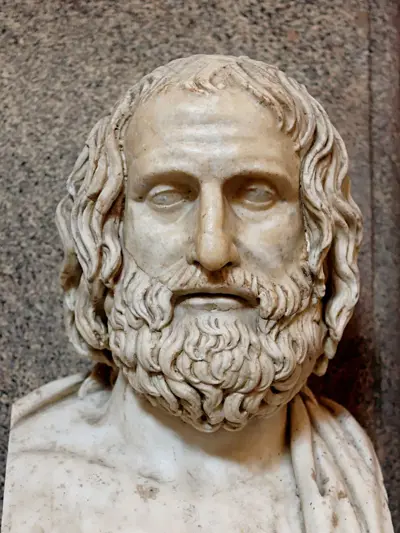
Euripides (/jʊəˈrɪpɪdiːz/; Greek: Εὐριπίδης Eurīpídēs, pronounced [eu̯.riː.pí.dɛːs]; c. 480 – c. 406 BC) was a tragedian of classical Athens. Along with Aeschylus and Sophocles, he is one of the three ancient Greek tragedians for whom any plays have survived in full. Some ancient scholars attributed ninety-five plays to him, but the Suda says it was ninety-two at most. Of these, eighteen or nineteen have survived more or less complete (Rhesus is suspect). There are many fragments (some substantial) of most of his other plays. More of his plays have survived intact than those of Aeschylus and Sophocles together, partly because his popularity grew as theirs declined—he became, in the Hellenistic Age, a cornerstone of ancient literary education, along with Homer, Demosthenes, and Menander.
