Floyd Dell Quotes
The Masses harassed by the post-office authorities, was suppressed in October, 1917, by the Government, and its editors were indicted, myself among them, under the so-called Espionage Act, which was being used not against German spies but against American Socialists, Pacifists, and anti-war radicals. Sentences of twenty years were being served out to all who dared say this was not a war to end war, or that the Allied loans would never be paid.
Floyd Dell, 1887-1969, Playwright, Editor, and Pacifist, Homecoming, 1933
Sourced by: Eigen's Political and Historical Quotations


The Justice Department shut the magazine down under the Espionage Act {612703} This censorship in hindsight was clearly unconstitutional, but this is yet another example of civil rights being eroded in wartime with timidity on the parts of the courts to uphold the constitution when the Executive is stating that the court ruling could greatly harm the nation. In retrospect, such testimony has almost always been fabricated lies or paranoid fears.


The suffragette movement was split by WWI and the issue of pacicism. See {621265} for the pro war factional view.

To support the war effort, the most militant suffragettes ceased anti Government militancy. The suffragette movement was split by WWI and the issue of pacifism. See {621266} for the anti-war factional view.


Berger was actually prosecuted, convicted, and sentenced to 20 years in prison, for this editorial. The House refused to seat him after the 1918 election (see {587981}); his constituents re-elected him in 1920 anyway. Finally the Supreme Court overturned his conviction, and he was again seated in Congress.


First woman elected to Congress. She was one of a handful of Congressman who opposed the WWI declaration. She was the only member of the House to oppose FDR’s request for a Declaration of War against Japan after Pearl Harbor.


President Lincoln reversed this order. Most Northerners however sided with Burnside on this point. They saw little point to protecting traitors who were helping to kill their neighbors by encouraging the Southerners.


The peace delegation squabbled among themselves over strategies and tactics and the delegation became a fiasco.

He had been invited to a White House arts function but refused.


Although it seems incredible to us today, thousands of people were arrested and prosecuted under the Espionage Act. The government particularly targeted leftists such as Eugene V. Debs, Bill Haywood, J. Philip Randolph, Victor Berger, John Reed, Max Eastman, and Emma Goldman. Debs was sentenced to 20 years in prison for criticizing the Act itself.
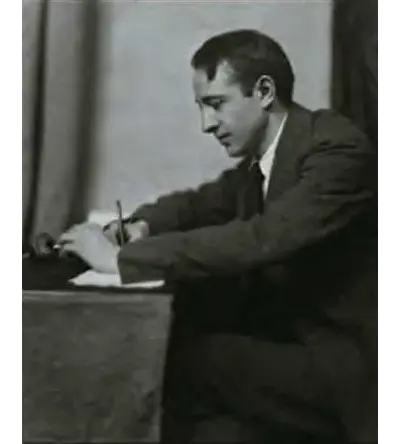
Floyd James Dell was an American newspaper and magazine editor, literary critic, novelist, playwright, and poet. Dell has been called "one of the most flamboyant, versatile and influential American Men of Letters of the first third of the 20th Century." In Chicago, he was editor of the nationally syndicated Friday Literary Review. As editor and critic, Dell's influence is seen in the work of many major American writers from the first half of the 20th century. A lifelong poet, he was also a best-selling author, as well as a playwright whose hit Broadway comedy, Little Accident (1928), was made into a Hollywood movie.
