Max Eastman Quotes
Food is as important to armies as ammunition—but more important than either is an unfailing supply of lies. You simply cannot murder your enemy in the most efficient manner if you know he is in every essential the same kind of a man as yourself.
Max Eastman, 1883-1969, Editor, “The War of Lies,” The Masses, October, 1914
Sourced by: Eigen's Political and Historical Quotations

Trumbo was morally opposed to war. He also refused to name Hollywood communists to Congressional Committees during the Red Scare. He was then blacklisted from his occupation, screen writing.


He was leading the Gordon Highlanders of the British Army against the Boers during the Boer War. He was seriously wounded and could not go on himself with a charge he had ordered, However, waifing his sword he made this famous qutation. Particualrly noteorthy is the derrogatory terms which he used to describe the enemy--the Boers of South Africa. In many wars and cultures, one or more of the combatants, in order to overcome the avarage soldier's reluctance to kill an enemy, characterizes them as less than human. In this case, vermin, who were to be exterminated. There were two predominant groups of whites who came to South Africa, the English who were generally well-educated and were interested in trading with the exhisting inhabitants and investing in businesses using mostly native labot and the Boers. The latter were of Dutch and German origin, poor farmers with little or no land in the home country and little education. Their interest was to create a nation where they could own land to farm. And the lest expensive way for them to increase their farmland was to sieze it from the native Blacks and who were the major forces behind the racial discrimination which became apartheid. The British contolled the government and sought stability and as in most of the British Empire, they wanted English law to prevail including the rights of the Black natives. The Boers had left Europe for good and would thrive or not in Southern Africa. Proportiopnately, the English might have a career in South Africa or serve there for a few years. They were Englishmen in a foreign country. The Boers saw themselves as citizens of Southern Africa who were fighting the native Blacks for control of the land. The English legal system would not allow any of the land seizures and political discrimination that the Boers saw as existential for their survival in Africa. Soon, the Boers took more and more of the law into their own hands and saw English rule and dmination as inimical to their interests in Africa and they tried to create their own independent states in Southern Africa. That was the essense of the Boer Wars. Dick-Cunyngham was awarded the Victoria Cross, the highest military decoration of Great Britain, for his exploits in the Afghan War.


Hoover headed the American Food agency early in his career. In a sense, he was right. Without American Food, the Allies in Europe woul;d have collapsed, and after the war, Amerocan feed kept the peace.


While Queen Mary was presenting medals to British soldiers during World War I, she said this to a soldier who had exclaimed “No more bloody wars for me”.


Unlike many socialists who were pacifists and against WWI, Foster and the communists were supporters of the war against fascist Germany, This was one of the reasons that Nazi Germany was virulently anti-communist later.
The phrase was picked up by the press, and then became the title to a patriotic song of World War II.


The Congress had applauded his message vigorously.


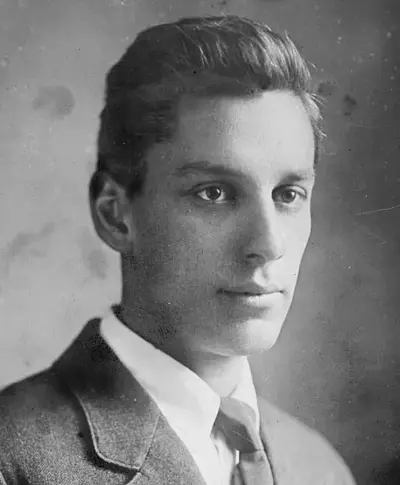
Max Forrester Eastman was an American writer on literature, philosophy and society, a poet and a prominent political activist. Moving to New York City for graduate school, Eastman became involved with radical circles in Greenwich Village. He supported socialism and became a leading patron of the Harlem Renaissance and an activist for a number of liberal and radical causes. For several years, he edited The Masses. With his sister Crystal Eastman, he co-founded in 1917 The Liberator, a radical magazine of politics and the arts.
