Ambrose Burnside Quotes
The habit of declaring sympathy for the enemy will not be allowed. Persons committing such offenses will be arrested with a view toward being tried, or sent beyond our lines to the lines of our friends.
President Lincoln reversed this order. Most Northerners however sided with Burnside on this point. They saw little point to protecting traitors who were helping to kill their neighbors by encouraging the Southerners.
Ambrose Burnside, 1824-1881, Union General, General Order No. 38, May 1863
Sourced by: Eigen's Political and Historical Quotations

Vallandigham was urging Union soldiers to refuse to fight and serve. Lincoln had to approve all the death sentences of deserters from the army and there were few duties that troubled him more … so much so that he even violated the 1st Amendment responsiblities he had sworn to uphold. Based in this precedent and others, President Woodrow Wilson jailed critics of the First World War including the labor leader Eugene Debs.


Although it seems incredible to us today, thousands of people were arrested and prosecuted under the Espionage Act. The government particularly targeted leftists such as Eugene V. Debs, Bill Haywood, J. Philip Randolph, Victor Berger, John Reed, Max Eastman, and Emma Goldman. Debs was sentenced to 20 years in prison for criticizing the Act itself.

This is the most formalized and sophisticated compendium of laws of the so-called “barbaric peoples” of Europe. The compilation was in many ways a documentation of the traditional laws of the Visigoths that had evolved over hundreds of years.

There was much similarity between the methods of the Nazis in Germany and the IRA in Ireland at that time. However, their objectives and philosophies were totally different. Like the Nazis, political opponents were “traitors”.


For many years, the English Customs Service would prevent books and other literature from being brought into the country if the authorities thought that they were seditious or unwholesome. The right to publish and the right to read was stronger for locally produced sedition or pornography than for imported where there were severe restrictions until recently. America had similar restrictions at the time.

Under this law Kamal Sayid Qadir who had posted material of the on the internet was accused action “defamatory of government leadership” and given a 30 year jail sentence. See {589505}.

At the height of the Spanish American War:. The publication that this quotation was taken from was distributed widely during the war. When the publisher attempted to mail the publication to military troops and leaders fighting abroad. The postmaster general refused to transmit the anti war material thought the mails. The furor that erupted over the censorship issue then assured a wide distribution of The Anti-Imperialist.

Arguing agaist libel and sedition prosecutions:


Italy was in the midst of civil war with the rebels in Emila wanting its independence from the civil authority of the Pope who then controlled virtually all of Italy. The French emperor, Napoleon BonaparteII, advised that the only way to produce peace was to allow Emila to have its independence. He was the last Pope to hold temporal power. While it should not be surprising, the Pope’s statement is essentially the same position that every autocratic authority has taken when there has been some local success of the rebels.

In WWI Congress had passed a law that prohibited anyone from undermining or interfering with the war effort. The defendants had passed out anti-war literature to young men heading for military service. The court then overlooked the First Amendment and came up with a strange logic where the “clear and present danger” was the test of whether the First Amendment would apply. The anti war pamphleteers went to jail. Today, we look back on this and find it very surprising but this is yet another example of erosion of freedom and civil liberties when the nation is at war. By the 1950s, the Supreme Court had reversed itself and the First Amendment was restored to its original intent.

This had been a general, bipartisan principle from WWII through the Gulf War, but in the War on Terrorism, President George W. Bush and his administration deviated from the traditional American view and accused those who were criticizing their counter terrorism of aiding and abetting the enemy and attacked the loyalty and patriotism of their critics.
She was found guilty of treason because she had passed out leaflets criticizing the Nazi regime on a university campus. The non violent resistance tactics were so threatening to the Nazi German regime that Sophia and other members were executed by beheading as a particularly harsh example.

This became a critically important quotation a half century after it was made. Judge Hand articulated the majority Western and Judeo-Christian value proposition between dissent and heresy. However, for the majority of the Islamic world, the reverse represents the majority value that is held. There is a minority in the West that agrees that avoidance of heresy is paramount and a minority of the Muslim world that agrees that the protection of dissent is the more important value, but the two civilizations were at odds in the 20th and 21st centuries. However, Islam is about 600 years younger than Christianity. 600 years ago, the Christian world agreed with the Muslim society and prevention of heresy was the more important value. The Reformation and the enlightenment followed by the world example of America produced a transformation and this may occur in the majority of the Islamic world in time.


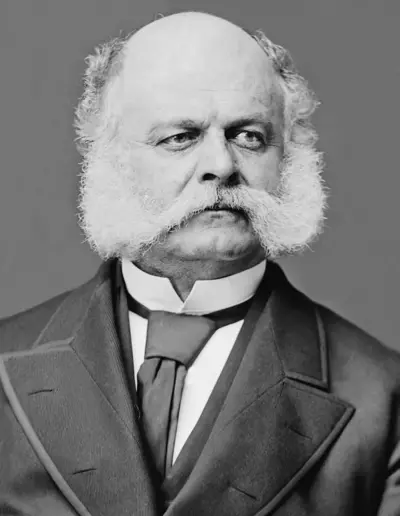
Ambrose Everett Burnside was an American soldier, railroad executive, inventor, industrialist, and politician from Rhode Island. He served as the Governor of Rhode Island from 1866 to 1869, and as a United States Senator for Rhode Island from 1875 until his death.
