Oliver Wendell Holmes Jr. Quotes
The speech at issue are used in such circumstances and are of such a nature that they present a clear and present danger that they would bring about the substantive evils that Congress has a right to prevent.
In WWI Congress had passed a law that prohibited anyone from undermining or interfering with the war effort. The defendants had passed out anti-war literature to young men heading for military service. The court then overlooked the First Amendment and came up with a strange logic where the “clear and present danger” was the test of whether the First Amendment would apply. The anti war pamphleteers went to jail. Today, we look back on this and find it very surprising but this is yet another example of erosion of freedom and civil liberties when the nation is at war. By the 1950s, the Supreme Court had reversed itself and the First Amendment was restored to its original intent.
Oliver Wendell Holmes Jr., 1841-1935, U. S. Supreme Court Justice, Schenck v. United States, 1919
Sourced by: Eigen's Political and Historical Quotations

In this famous case the unanimous court allowed the conviction of pacifists who wrote a pamphlet saying that the military draft was unconstitutional and wrong. The logic was that there was an immediate “clear and present danger” to the nation and therefore the usual Constitutional protections did not apply.


Nixon’s views of free speech rights did not recognize the right of those who advocate revolution or government or system change in America. By his standard all of the Founding Fathers should not have been entitled to most of their early speeches. The Supreme Court repeatedly rejected his standard, distinguishing between speech to change or reform the government and illegal action to bring those changes about.

The Masses was a left wing publication which the then Post Office officials decided were “dangerous”. Later, the Supreme Court would hold that there could not be this degree of political censorship by Post Office officials.


Berger, an elected Congressman, was denied his seat after he had written an editorial against the First World War {587982} and been convicted under the then existing law. The House vote was 311 to 1. The 1 was Voigt. Berger was re-elected again anyway. Finally, the Supreme Court overturned his conviction and the House seated Burger. The one had been right; the 311, wrong.

Arguing agaist libel and sedition prosecutions:
Twenty year prison sentences were imposed for publishing left wing Bolshevik literature. The case was appealed to the Supreme Court:


Those who wanted to restrict freedom of speech during World War I argued that the popular will could express itself during elections:

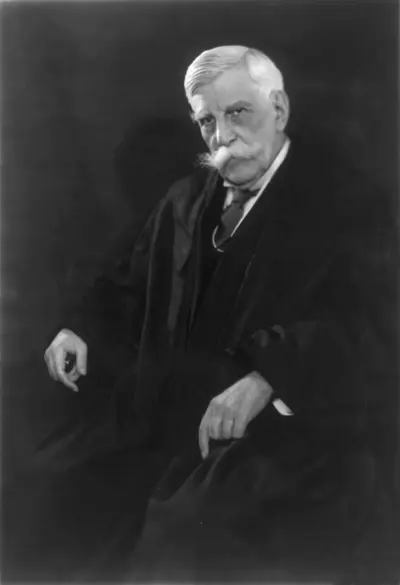
Oliver Wendell Holmes Jr. was an American jurist who served as an Associate Justice of the Supreme Court of the United States from 1902 to 1932. Noted for his long service, concise and pithy opinions, and deference to the decisions of elected legislatures, he is one of the most widely cited United States Supreme Court justices in history, particularly for opinions on civil liberties and American constitutional democracy, and is one of the most influential American common law judges, honored during his lifetime in Great Britain as well as the United States. Holmes retired from the court at the age of 90, an unbeaten record for oldest justice in the federal Supreme Court (although John Paul Stevens was only 8 months younger when he retired on April 12, 2010). He previously served as an Associate Justice and as Chief Justice of the Massachusetts Supreme Judicial Court, and was Weld Professor of Law at his alma mater, Harvard Law School.
