Oliver Wendell Holmes Jr. Quotes
We admit that, in many places and in ordinary times, the defendants, in saying all that was said in the circular, would have been within their constitutional rights. But the character of every act depends upon the circumstances in which it is done.... The question in every case is whether the words used are used in such circumstances and are of such a nature as to create a clear and present danger that they will bring about the substantive evils that Congress has a right to prevent. It is a question of proximity and degree.
In this famous case the unanimous court allowed the conviction of pacifists who wrote a pamphlet saying that the military draft was unconstitutional and wrong. The logic was that there was an immediate “clear and present danger” to the nation and therefore the usual Constitutional protections did not apply.
Oliver Wendell Holmes Jr., 1841-1935, U. S. Supreme Court Justice, Schenck v. United States, 1919
Sourced by: Eigen's Political and Historical Quotations

In WWI Congress had passed a law that prohibited anyone from undermining or interfering with the war effort. The defendants had passed out anti-war literature to young men heading for military service. The court then overlooked the First Amendment and came up with a strange logic where the “clear and present danger” was the test of whether the First Amendment would apply. The anti war pamphleteers went to jail. Today, we look back on this and find it very surprising but this is yet another example of erosion of freedom and civil liberties when the nation is at war. By the 1950s, the Supreme Court had reversed itself and the First Amendment was restored to its original intent.

She was defending the right various media to display cartoons of the Muslim Prophet Muhammad which were very offensive to orthodox and traditional Muslims, many of whom had rioted in countries the world over. Many media outlets thought the cartoons too offensive to be displayed; others were too intimidated to display the cartoons and some displayed them anyway. Ali, born and brought up as a Muslim was one of the relatively few of that religion to defend the right of the publishers,
Twenty year prison sentences were imposed for publishing left wing Bolshevik literature. The case was appealed to the Supreme Court:


Schlessinger had made derogatory remarks about homosexuals and her supporters claimed that she was entitled to freedom of speech.


Arguing for the abolition of taxes on newspapers: 1st Baron Lytton of Knebworth


Striking down a law making cross burning a crime:

Those who wanted to restrict freedom of speech during World War I argued that the popular will could express itself during elections:


Tinker referred to the Supreme Court Case of Tinker v. Des Moines where the court ruled that school children had Constitutional rights as well as adults. It was not possible to have a blocking system that would keep “improper” or “indecent” internet sites from library or school computers. Even if it could, the appropriate material for a 17 year old to see and a 5 year old were very different. The blocking software never worked well. Computer sophisticated students would pride themselves by showing how they could evade the blocking software, and at the same time teen age girls would have health sites blocked because they showed how to do breast self-examinations.

Hale's "Church" was a White Supremicist violent, terrorist, organization. Hale himself was jailed for attemoting to assassinate a Federal Judge.

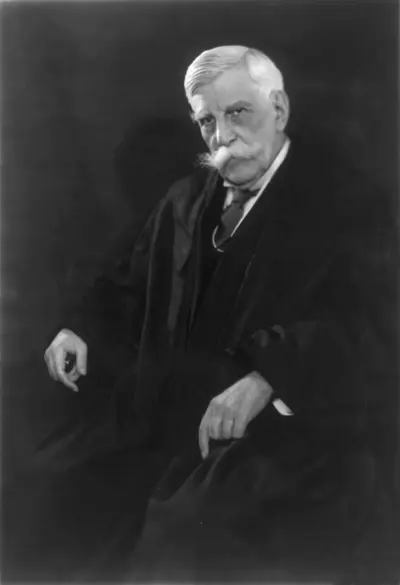
Oliver Wendell Holmes Jr. was an American jurist who served as an Associate Justice of the Supreme Court of the United States from 1902 to 1932. Noted for his long service, concise and pithy opinions, and deference to the decisions of elected legislatures, he is one of the most widely cited United States Supreme Court justices in history, particularly for opinions on civil liberties and American constitutional democracy, and is one of the most influential American common law judges, honored during his lifetime in Great Britain as well as the United States. Holmes retired from the court at the age of 90, an unbeaten record for oldest justice in the federal Supreme Court (although John Paul Stevens was only 8 months younger when he retired on April 12, 2010). He previously served as an Associate Justice and as Chief Justice of the Massachusetts Supreme Judicial Court, and was Weld Professor of Law at his alma mater, Harvard Law School.
