Hugo Black Quotes
An unconditional right to say what one pleases about public affairs is what I consider to be the minimum guarantee of the 1st Amendment.
Hugo Black, 1886-1971, U. S. Senator (Democrat, AL), U. S. Supreme Court Justice, New York Times v. Sullivan, 1964
Sourced by: Eigen's Political and Historical Quotations


The Nazis were banned from demonstrating in the streets of Skokie, Illinois on the grounds that they would incite violence. However, Goldberger of the ACLU took their case and won their right to spew their hatred before the Supreme Court.


Stopping the FCC from challenging broadcast licenses for programming-related deficiencies:

Striking down a law making cross burning a crime:

This was a decade before the Constitutional Convention in Philadelphia. You can imagine the distress of Vermonters when the U. S. Constitution was written with no provision for absolute freedom of speech which they had had for a over a decade. They would not ratify the U, S, Constitution without the understanding that there would be a Bill of Rights added with the First Amendment.

This quotation was used ten years later by Virginia which, in convention, passed a resolution objecting to the Alien & Sedition Acts. The drafter of the original resolution was James Madison.

Nixon’s views of free speech rights did not recognize the right of those who advocate revolution or government or system change in America. By his standard all of the Founding Fathers should not have been entitled to most of their early speeches. The Supreme Court repeatedly rejected his standard, distinguishing between speech to change or reform the government and illegal action to bring those changes about.
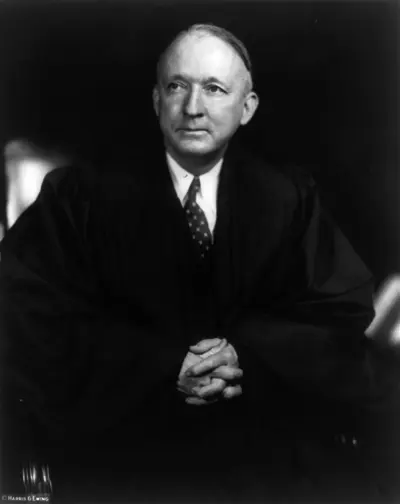
Hugo Lafayette Black was an American lawyer, politician, and jurist who served as a U.S. Senator from 1927 to 1937 and as an Associate Justice of the Supreme Court of the United States from 1937 to 1971. A member of the Democratic Party and a devoted New Dealer, Black endorsed Franklin D. Roosevelt in both the 1932 and 1936 presidential elections. Having gained a reputation in the Senate as a reformer, Black was nominated to the Supreme Court by President Roosevelt and confirmed by the Senate by a vote of 63 to 16 (six Democratic Senators and 10 Republican Senators voted against him). He was the first of nine Roosevelt appointees to the Court, and he outlasted all except for William O. Douglas.
