Oliver Wendell Holmes Jr. Quotes
I believe that the defendants had as much right to publish as the Government has to publish the Constitution.
Twenty year prison sentences were imposed for publishing left wing Bolshevik literature. The case was appealed to the Supreme Court:
Oliver Wendell Holmes Jr., 1841-1935, U. S. Supreme Court Justice, Abrams v. United States, 1919
Sourced by: Eigen's Political and Historical Quotations


The Masses was a left wing publication which the then Post Office officials decided were “dangerous”. Later, the Supreme Court would hold that there could not be this degree of political censorship by Post Office officials.


Two decades later Jefferson, after his Presidency, had developed a different attitude towards the press. See {585116}.

Jefferson was visited by a famous German scientist who read a newspaper in the President's study which viciously attacked Jefferson. The scientist asked why this was allowed in America:
Striking down a law making cross burning a crime:

Nixon’s views of free speech rights did not recognize the right of those who advocate revolution or government or system change in America. By his standard all of the Founding Fathers should not have been entitled to most of their early speeches. The Supreme Court repeatedly rejected his standard, distinguishing between speech to change or reform the government and illegal action to bring those changes about.


Arguing against explicit guarantees of press freedom in the Constitution Hamilton felt that the freedom could be maintained by public opinion and the good will of government:

The evils of the time were even worse than in modern times. Most newspapers, journals, and periodicals were in 1835 actually owned and operated by political parties or people totally identified with political parties. In modern times, there are publications and blogs which are controlled by political forces, but most are not.


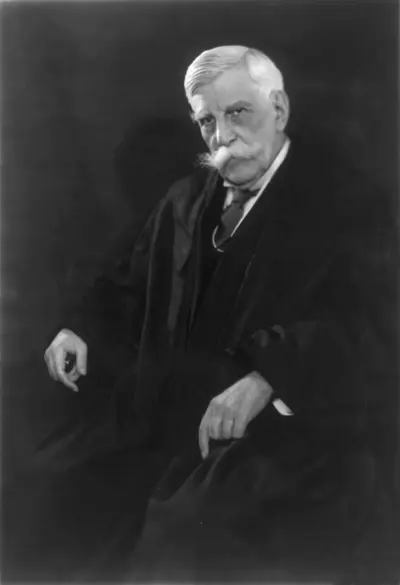
Oliver Wendell Holmes Jr. was an American jurist who served as an Associate Justice of the Supreme Court of the United States from 1902 to 1932. Noted for his long service, concise and pithy opinions, and deference to the decisions of elected legislatures, he is one of the most widely cited United States Supreme Court justices in history, particularly for opinions on civil liberties and American constitutional democracy, and is one of the most influential American common law judges, honored during his lifetime in Great Britain as well as the United States. Holmes retired from the court at the age of 90, an unbeaten record for oldest justice in the federal Supreme Court (although John Paul Stevens was only 8 months younger when he retired on April 12, 2010). He previously served as an Associate Justice and as Chief Justice of the Massachusetts Supreme Judicial Court, and was Weld Professor of Law at his alma mater, Harvard Law School.
