Hugo Black Quotes
Freedom to publish means freedom for all and not for some. Freedom to publish is guaranteed by the constitution but freedom to continue to prevent others from publishing is not.
Hugo Black, 1886-1971, U. S. Senator (Democrat, AL), U. S. Supreme Court Justice, One Man’s Stand For Freedom, 1963
Sourced by: Eigen's Political and Historical Quotations

Two decades later Jefferson, after his Presidency, had developed a different attitude towards the press. See {585116}.


Twenty year prison sentences were imposed for publishing left wing Bolshevik literature. The case was appealed to the Supreme Court:

The statement was in protest to the Spanish arrest of a Syrian born journalist, Taysir Alluni, who had been accused of supporting Al-Quaeda cells in Spain by moving money to the cells. Alluni was well connected with Al-Quaeda as he had reported on them for some time and had personally interviewed Osama Bin Laden. Many believe that the cash was a cultural misinterpretation of the Muslim custom of sending cash as a wedding present which the Spanish authorities may have misinterpreted as financing of terrorism. Many believe that he is the victim of Anti-Islamic bias. While many legitimate news organizations are are troubled by this case, the Syrian protest is particularly ironic. In Syria there is not freedom of the press and any reporter can go to jail for offenses from insulting Islam to disparaging the Syrian government and its officials. There is no such thing as freedom of expression in Syria and there has not been since the Baathists gained control of the government.

This quotation was used ten years later by Virginia which, in convention, passed a resolution objecting to the Alien & Sedition Acts. The drafter of the original resolution was James Madison.

Jefferson was visited by a famous German scientist who read a newspaper in the President's study which viciously attacked Jefferson. The scientist asked why this was allowed in America:

Originally it was published in Boston under the name “A Columbian Patriot.” This was written before the Bill of Rights had been added. Criticism like this led to their addition by Congress in order to obtain ratification.


This was a decade before the Constitutional Convention in Philadelphia. You can imagine the distress of Vermonters when the U. S. Constitution was written with no provision for absolute freedom of speech which they had had for a over a decade. They would not ratify the U, S, Constitution without the understanding that there would be a Bill of Rights added with the First Amendment.


Nixon’s views of free speech rights did not recognize the right of those who advocate revolution or government or system change in America. By his standard all of the Founding Fathers should not have been entitled to most of their early speeches. The Supreme Court repeatedly rejected his standard, distinguishing between speech to change or reform the government and illegal action to bring those changes about.

The evils of the time were even worse than in modern times. Most newspapers, journals, and periodicals were in 1835 actually owned and operated by political parties or people totally identified with political parties. In modern times, there are publications and blogs which are controlled by political forces, but most are not.

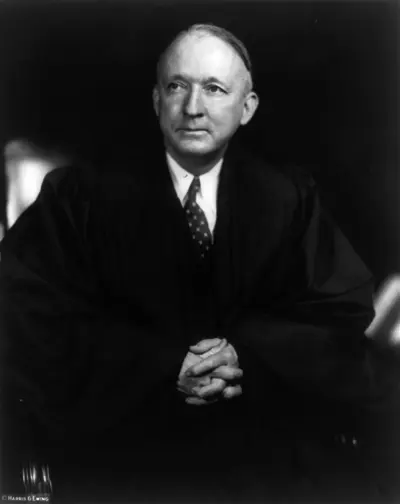
Hugo Lafayette Black was an American lawyer, politician, and jurist who served as a U.S. Senator from 1927 to 1937 and as an Associate Justice of the Supreme Court of the United States from 1937 to 1971. A member of the Democratic Party and a devoted New Dealer, Black endorsed Franklin D. Roosevelt in both the 1932 and 1936 presidential elections. Having gained a reputation in the Senate as a reformer, Black was nominated to the Supreme Court by President Roosevelt and confirmed by the Senate by a vote of 63 to 16 (six Democratic Senators and 10 Republican Senators voted against him). He was the first of nine Roosevelt appointees to the Court, and he outlasted all except for William O. Douglas.
