Byron White Quotes
A license permits broadcasting, but the licensee has no constitutional right to be the one who holds the license or to monopolize a radio frequency to the exclusion of his fellow citizens. There is nothing in the First Amendment which prevents the government from requiring a licensee to share his frequency with others.... There is no sanctuary in the First Amendment for unlimited private censorship operating in a medium not open to all.... It is the right of the viewers and listeners, not the right of the broadcasters, which is paramount.... It is the purpose of the First Amendment to preserve an uninhibited marketplace of ideas in which truth will ultimately prevail, rather than to countenance monopolization of that market, whether it be by the government itself or a private licensee. It is the right of the public to receive suitable access to social, political, esthetic, moral, and other ideas and experiences which is crucial here. That right may not constitutionally be abridged either by Congress or by the FCC.
Byron R. White, 1917—2002, U. S. Supreme Court Justice, Red Lion Broadcasting Co. v. FCC, June 9, 1969
Sourced by: Eigen's Political and Historical Quotations


Stopping the FCC from challenging broadcast licenses for programming-related deficiencies:

Twenty year prison sentences were imposed for publishing left wing Bolshevik literature. The case was appealed to the Supreme Court:

Defending the government's program of forced resettlement of Japanese-Americans in World War II:
In this famous case the unanimous court allowed the conviction of pacifists who wrote a pamphlet saying that the military draft was unconstitutional and wrong. The logic was that there was an immediate “clear and present danger” to the nation and therefore the usual Constitutional protections did not apply.


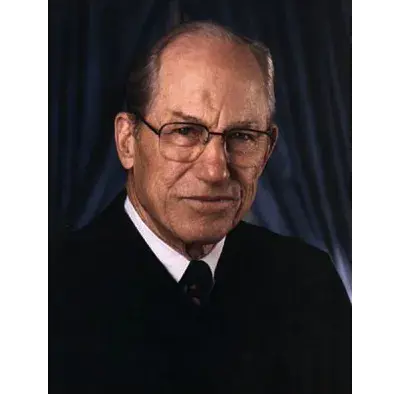
Byron Raymond "Whizzer" White was an American lawyer and professional football player who served as an Associate Justice of the Supreme Court of the United States from 1962 to 1993. Born and raised in Colorado, he played college football, basketball, and baseball for the University of Colorado, finishing as the runner up for the Heisman Trophy in 1937. He was selected in the first round of the 1938 NFL Draft by the Pittsburgh Pirates and led the National Football League in rushing yards in his rookie season. White was admitted to Yale Law School in 1939 and played for the Detroit Lions in the 1940 and 1941 seasons while still attending law school. During World War II, he served as an intelligence officer with the United States Navy in the Pacific Theatre. After the war, he graduated from Yale and clerked for Chief Justice Fred M. Vinson.
