Anthony Kennedy Quotes
Speech is an essential mechanism of democracy, for it is the means to hold officials accountable to the people. [...] The right of citizens to inquire, to hear, to speak, and to use information to reach consensus is a precondition to enlightened self-government and a necessary means to protect it. [...] By taking the right to speak from some and giving it to others, the Government deprives the disadvantaged person or class of the right to use speech to strive to establish worth, standing, and respect for the speaker’s voice. The Government may not by these means deprive the public of the right and privilege to determine for itself what speech and speakers are worthy of consideration. The First Amendment protects speech and speaker, and the ideas that flow from each.
Anthony Kennedy, Citizens United v. Federal Election Commission, 558 U.S. 50 (21 January 2010).
Sourced by: Eigen's Political and Historical Quotations


It is ironic that Pakistan, the creation of Jinnah’s efforts, has to a great extent adopted Sharia (Islamic Law) resulting in severe curtailment of freedom of speech and thought. Professors languish in jail for not teaching the history of Muhammed in the orthodox way, people are sentenced to death for what the local mullahs regard as blasphemy—results which from Jinnah’s point of view were terrible.


The 1st Amendment is almost absolute in its protection of speech. However, ironically the Untied States has much less internecine conflict with minorities better off than the nations where hate speech is illegal and criminal.
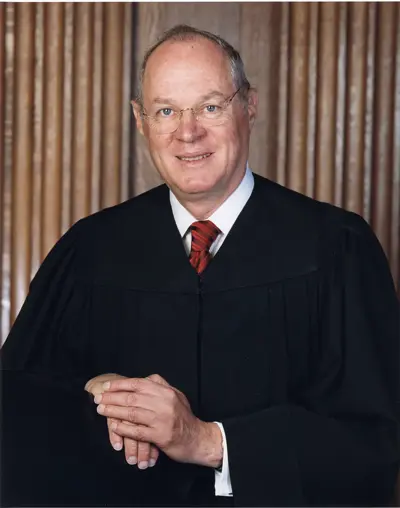
Anthony McLeod Kennedy is a retired American lawyer and jurist who served as an Associate Justice of the Supreme Court of the United States from 1988 until his retirement in 2018. He was nominated to the court in 1987 by President Ronald Reagan, and sworn in on February 18, 1988. After the retirement of Sandra Day O'Connor in 2006, he was the swing vote on many of the Roberts Court's 5–4 decisions.
