Visigoths Quotes
He who curses the prince (king), is an offender against the people.
This is the most formalized and sophisticated compendium of laws of the so-called “barbaric peoples” of Europe. The compilation was in many ways a documentation of the traditional laws of the Visigoths that had evolved over hundreds of years.
Visigothic Code, Section VII, Book II, Forum Judicum, Legal Compilation of the laws of the Spanish Visigoths, ~650
Sourced by: Eigen's Political and Historical Quotations


He was an ally of the Ku Klux Klan and shared their vision of a binary moral and ethical world. There was no room for critics of the war effort.


This testimony turned out to be a tactical error. The main purpose of Tojo was to protect Emperor Hirohito from responsibility for the war. See {587277}. But by admitting that he never disobeyed even the Emperor’s wishes, he made it clear that he had implemented the Emperor’s desired policies. Therefore, Hirohito must have been responsible. After this testimony there was some delay and he changed his testimony claiming that once he disobeyed the Emperor when he took the nation to war. Few believed this second version, but it was sufficient to keep Hirohito from being charged—which despite many calls for his trial, General MacArthur also did not want the Emperor brought to account as the institution was making the occupation of Japan very easy.

Adultery for a queen was considered treason. Adultery per se was not punished with death in 16th century England, but the concept was that a Queen who committed adultery was risking the royal bloodline and therefore the Crown and the Nation.

President Lincoln reversed this order. Most Northerners however sided with Burnside on this point. They saw little point to protecting traitors who were helping to kill their neighbors by encouraging the Southerners.


1st Duke of Wellington. The King was somewhat delusional, and there is no historical records of his ever having personally fought in the Napoleonic wars at all. This quotation has often been nominated for the most tactful in history.

While the Visigoths had some very advanced legal principles, this law, quoted in its entirety is typical of the nations that were part of the Catholic world. The church and its doctrines were immune from any possible criticism, explicit or implicit. This is the most formalized and sophisticated compendium of laws of the so-called “barbaric peoples” of Europe. The compilation was in many ways a documentation of the traditional laws of the Visigoths that had evolved over hundreds of years.

If men's minds were as easily controlled as their tongues, every king would sit safely on his throne
Spinoza’s ideas were considered so radical and dangerous that he was the only man in history who was excommunicated by the Catholics, the Jews and the Muslims.


This is an amazing speech which illustrated the best of the development and growth of Islam. Note that: The ruler who has just been given ALL secular AND religious power admits candidly that he may not be the best qualified. This would not happen for over another 1000 years and even today is very rare in any society. In addition, he invites the citizens to correct him when he is wrong. Later, Calihs would, like the Christian kings and popes claim infallibiity and kill any who suggested otherwise. And daring to correct the ruler was capital offence for most of history and is even dangerous in some Muslim countries today. Last and perhaps most amazing, the new Caliph called for an affirmative leveling of the inequality of rights and power and announces it asa one of his major responsiblities. It is this kind of vision so unheard of at the time which shows us why so many flocked to Islam at the time. From a fairness, human rights, and accoutabiity of the ruler point of view Islam was the most modern of the religions then. Tragically, other forces shaped Islam for the next 1500 years and most Muslim countries become the least modern and its rulers are least accountable to the citizenry with none of the other rights and concept of fairness that Abu Bakr and other early Islamic leaders brought.


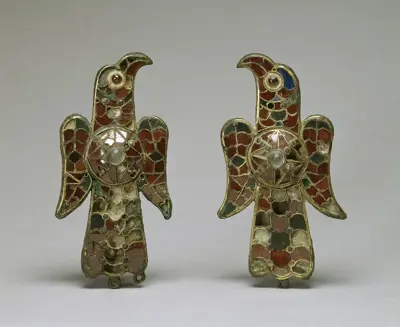
The Visigoths (/ˈvɪzɪɡɒθs/; Latin: Visigothi, Wisigothi, Vesi, Visi, Wesi, Wisi) were an early Germanic people who, along with the Ostrogoths, constituted the two major political entities of the Goths within the Roman Empire in Late Antiquity, or what is known as the Migration Period. The Visigoths emerged from earlier Gothic groups, including a large group of Thervingi, who had moved into the Roman Empire beginning in 376 and had played a major role in defeating the Romans at the Battle of Adrianople in 378. Relations between the Romans and the Visigoths were variable, alternately warring with one another and making treaties when convenient. Under their first leader, Alaric I, they invaded Italy and sacked Rome in August 410. Afterwards, they began settling down, first in southern Gaul and eventually in Hispania, where they founded the Visigothic Kingdom and maintained a presence from the 5th to the 8th centuries AD.
