Thomas Dale Quotes
No man shall use any traiterous words against his Majesties Person, or royall authority upon paine of death.
Thomas Dale, Article 4 of the Code [often referred to as "Dale's Laws"] he promolgated for the Virginia Colony in 1612
Sourced by: Eigen's Political and Historical Quotations

This is the most formalized and sophisticated compendium of laws of the so-called “barbaric peoples” of Europe. The compilation was in many ways a documentation of the traditional laws of the Visigoths that had evolved over hundreds of years.


In this instance Pitt and a few others were arguing against the Stamp Act. They were accused of fomenting rebellion by advocating the same position of the rebellious colonists. Criticism of government policy is often castigated by claiming that enemies of the nation will take aid and comfort by the criticism and be encouraged in their conflict. In this case it was the Stamp Act. In more modern times those members of Congress in America who opposed the Iraq War and wanted withdrawal of U. S. troops were accused of aiding, comforting and encouraging the enemy. It is the favorite tactic of governments under attack for its foreign policy.

Adultery for a queen was considered treason. Adultery per se was not punished with death in 16th century England, but the concept was that a Queen who committed adultery was risking the royal bloodline and therefore the Crown and the Nation.


The libel and slander laws in England were then, and are today, dramatically different from those of the United States in two fundamental ways: In America truth is an absolute defense; in England you can’t say true things about people which are personally libelous. Second, in America politicians and public figures are not entitled to a verdict even if the statements are inadvertently or possibly false. Without the Constitutional protections of freedom of speech and freedom of the press, the reputations of people including public figures are given much more weight in England than in America.


The book was very critical of the way capitol punishment is meted out in Singapore. The Singapore Attorney General’s Office then claimed that the book had brought disrespect on the courts of Singapore by being so critical and tried him for “criminal defamation”. Shadrake was fined $30,000 and when he planned on publishing a second edition he was tried again and threatened with Jail. The fundamental problem is that if part of a nation’s government is corrupt, ineffective or incompetent and someone tells that to the public, there will certainly be less respect for the institution. So demanding respect, is tantamount to abandoning freedom of speech in general and criticism of the government in particular,
This principle was incorporated into American law by the Supreme Court 1964 decision in Sullivan v. New York Times, where this argument drove the opinion.

This distinction is the basis for the Supreme Court Decision in New York Times v Sullivan where they ruled that the libel of a public figure is not to be punished unless it was malicious and not just defamatory. In England, a person can be sued for slandering a politician. Worse, truth is not an absolute defense in a libel suit in England as it is in the United States.


President Lincoln reversed this order. Most Northerners however sided with Burnside on this point. They saw little point to protecting traitors who were helping to kill their neighbors by encouraging the Southerners.

A critical difference between English and American law is that truth is an absolute defense in the U. S. but is not in Great Britain. In the case of public figures, "the great," even truth is not required in U. S. law. It is not against American law to slander public figures as long as it is not malicious.

1st Duke of Wellington. The King was somewhat delusional, and there is no historical records of his ever having personally fought in the Napoleonic wars at all. This quotation has often been nominated for the most tactful in history.


Usually Jefferson was the strongest voice for rights with no loopholes. However, he wanted to have a slander exception as this quote shows. However, the issue is what happens if a government official or an agency believed that it has been falsely slandered? If Jefferson’s proposal was accepted completely, the government and officials could sue someone who published negative information that they thought was false. Our supreme court has limited the exception to private parties who were NOT “public figures” unless the publisher knew the information was false and proceeded anyway for malicious reasons.
England and most other countries do not have such an exception and the press is very timid about criticizing the government or officials lest they make a mistake .
The word “printer” had a slightly different meaning then. In Jefferson’s time the printer was also the publisher, Benjamin Franklin was known as a printer but he not only published material but wrote much of it himself. This was typical. So Jefferson is concerned with the rights of the printer, the publisher and the writer.


This poster's distribution before the JFK murder, has fed numerous conspiracy theories that right wing extremists were behind the assassination.


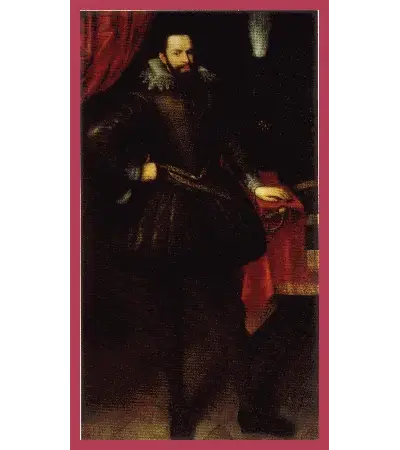
Sir Thomas Dale was an English naval commander and deputy-governor of the Virginia Colony in 1611 and from 1614 to 1616. Governor Dale is best remembered for the energy and the extreme rigour of his administration in Virginia, which established order and in various ways seems to have benefited the colony, although he was criticised for high-handedness. He is also credited with the establishment of Bermuda Hundred, Bermuda Cittie, and the Cittie of Henricus.
