William Pitt the Younger Quotes
Sorry I am to hear the liberty of speech in this house, imputed as a crime. No gentleman ought to be afraid to exercise it. It is a liberty by which the gentleman who calumniates it might have profited, and by which he ought to have profited.
In this instance Pitt and a few others were arguing against the Stamp Act. They were accused of fomenting rebellion by advocating the same position of the rebellious colonists. Criticism of government policy is often castigated by claiming that enemies of the nation will take aid and comfort by the criticism and be encouraged in their conflict. In this case it was the Stamp Act. In more modern times those members of Congress in America who opposed the Iraq War and wanted withdrawal of U. S. troops were accused of aiding, comforting and encouraging the enemy. It is the favorite tactic of governments under attack for its foreign policy.
William Pitt, 1708-1778, 1st Earl of Chatham, British Prime Minister, Secretary of State, Lord Privy Seal & leader of the House of Commons, Speech, House of Commons, February 4, 1738
Sourced by: Eigen's Political and Historical Quotations


In a particularly acrimonious House debate on the largest military appropriations bill in the history of the country, the speaker limited an opponent to 45 seconds to argue against the pending bill. Jacobs shouted his protest:

The libel and slander laws in England were then, and are today, dramatically different from those of the United States in two fundamental ways: In America truth is an absolute defense; in England you can’t say true things about people which are personally libelous. Second, in America politicians and public figures are not entitled to a verdict even if the statements are inadvertently or possibly false. Without the Constitutional protections of freedom of speech and freedom of the press, the reputations of people including public figures are given much more weight in England than in America.


Written when only a teenager.


There was much similarity between the methods of the Nazis in Germany and the IRA in Ireland at that time. However, their objectives and philosophies were totally different. Like the Nazis, political opponents were “traitors”.


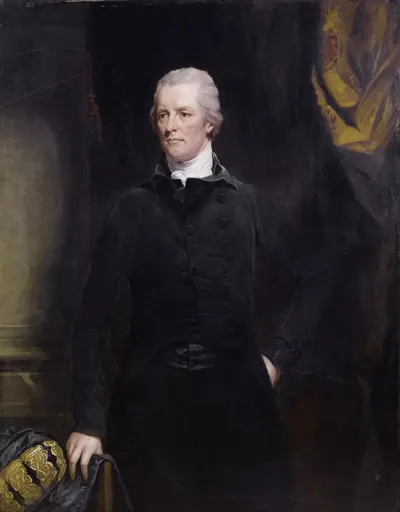
William Pitt the Younger was a prominent British Tory statesman of the late eighteenth and early nineteenth centuries. He became the youngest prime minister of Great Britain in 1783 at the age of 24 and the first prime minister of the United Kingdom of Great Britain and Ireland as of January 1801. He left office in March 1801, but served as prime minister again from 1804 until his death in 1806. He was also Chancellor of the Exchequer for all of his time as prime minister. He is known as "the Younger" to distinguish him from his father, William Pitt, 1st Earl of Chatham, who is customarily referred to as "William Pitt the Elder" (or less commonly, simply "Chatham") and had previously served as prime minister.
