Jeannette Rankin Quotes
I love my country but I cannot vote for war.
First woman elected to Congress. She was one of a handful of Congressman who opposed the WWI declaration. She was the only member of the House to oppose FDR’s request for a Declaration of War against Japan after Pearl Harbor.
Jeannette Rankin, 1880-1973, U. S. Congresswoman (Republican, MT), Statement in the House floor refusing to vote for the Declaration of War which President Woodrow Wilson had asked, 1917
Sourced by: Eigen's Political and Historical Quotations

First woman elected to Congress. Vote against the Declaration of World War I requested by President Woodrow Wilson. The Congresswoman was consistent. When President Roosevelt asked Congress for a declaration of war against Japan after Pearl Harbor, she cast the only "no" vote. She was therefore the only member of Congress who voted against the declaration of War in both WWI and WWII.


While Queen Mary was presenting medals to British soldiers during World War I, she said this to a soldier who had exclaimed “No more bloody wars for me”.


See Noah Webster and Timothy Pickering for similar positions. The War of 1812 was very unpopular with the New England states. They had the most developed trade with England and were economically injured by the curtailment of that trade. The citizens of Essex wanted to give the State Legislature the most possible moral and political power to negotiate an end to the war.


This is a classic libertarian position.

There was a Sedition law which made it a Federal felony to encourage anyone not to join or support the military during the First World War. The Socialist Politician and Candidate for President, Eugene Debbs and others, were jailed for less seditious statements. Helen Keller was a remarkable woman who was blind and deaf, and yet she became a great orator and social reformer. The administration died not relish the reaction if they put this popular, blind, deaf woman in jail so she was never charged. The law of course was unconstitutional, but it took years to reach that determination. Until then, the Sedition Act was one of the worst examples of infringement in American history since the original Alien and Sedition Acts of John Adams.


Theodore Roosevelt was the Presidential nominee. Johnson was a leader of some members of Congress some of whom were extreme isolationists and some of whom were Nazi sympathizers and Hitler admirers. When the Japanese attacked Pearl Harbor later that year, Germany, fulfilling its treaty with Japan, declared war on America, Johnson’s group no longer mattered. Before WWII most Republicans were opposed to Defense Spending and accused the Democrats of being war hawks. After WWII, they flip flopped and became more hawkish than the Democrats who they accused of being soft on defense for years thereafter. See {631380} for President Roosevelt’s different view.


This was Ford in the middle of his career. As he got older, he changed radically. He was later one of the biggest supporters and admirers of Adolf Hitler and his aggressive militarism.

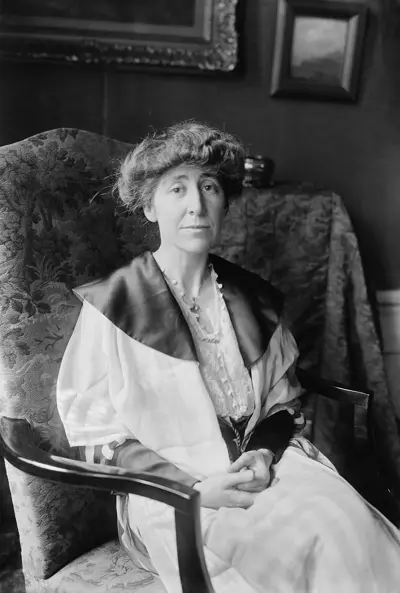
Jeannette Pickering Rankin was an American politician and women's rights advocate, and the first woman to hold federal office in the United States. She was elected to the U.S. House of Representatives as a Republican from Montana in 1916, and again in 1940.
