Dwight D. Eisenhower Quotes
When people speak to you about a preventive war, you tell them to go and fight it. After my experience, I have come to hate war.
Eisenhower, Dwight D. Public Papers of the Presidents of the United States: Dwight D. Eisenhower, 1954. Office of the Federal Register, 1960, p. 704.

14 years after this statesmanlike speech, Davis flip flopped on this principle and became a firebrand and agitator and hawk for secession and war. It was the Southern upper class that controlled the politics of the South and were the ones who would suffer the greatest economic loss if the Union had continued in the direction of refusing to return runaway slaves and other abolitionist activity. Although many Southerners volunteered to fight for the confederacy, there were not enough and Davis, who in earlier years would not war unless there was genuine demand of the people, for the Civil War, the South had to resort to conscription. The North did as well.


While Queen Mary was presenting medals to British soldiers during World War I, she said this to a soldier who had exclaimed “No more bloody wars for me”.


Theodore Roosevelt was the Presidential nominee. Johnson was a leader of some members of Congress some of whom were extreme isolationists and some of whom were Nazi sympathizers and Hitler admirers. When the Japanese attacked Pearl Harbor later that year, Germany, fulfilling its treaty with Japan, declared war on America, Johnson’s group no longer mattered. Before WWII most Republicans were opposed to Defense Spending and accused the Democrats of being war hawks. After WWII, they flip flopped and became more hawkish than the Democrats who they accused of being soft on defense for years thereafter. See {631380} for President Roosevelt’s different view.


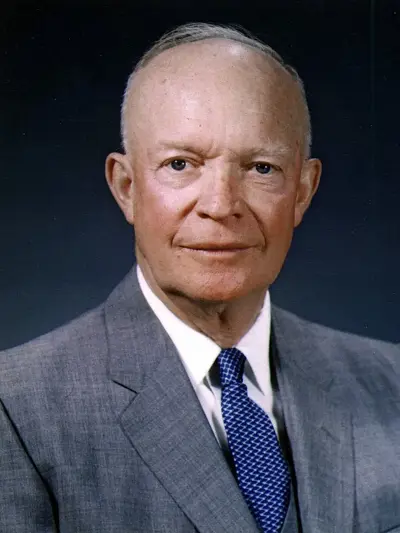
Dwight David "Ike" Eisenhower GCB OM GCS CCLH KC NPk was an American military officer and statesman who served as the 34th president of the United States from 1953 to 1961. During World War II, he became a five-star general in the Army and served as Supreme Commander of the Allied Expeditionary Force in Europe. He was responsible for planning and supervising the invasion of North Africa in Operation Torch in 1942–43 and the successful invasion of Normandy in 1944–45 from the Western Front.
