Rudyard Kipling Quotes
For all we have and are, For all our children’s fate, Stand up and take the war. The Hun is at the gate!
Rudyard Kipling, 1865-1936, British Nobel Laureate in Literature, For All We Have and Are, 1914
Sourced by: Eigen's Political and Historical Quotations


This was the address where FDR used the “arsenal of democracy” phrase which became so famous. A similar phrase was used in May by Robert E. Sherwood--{624748}. Then Jean Monnet began to use the exact phrase in Mid 1940--{624746}. He almost certainly had read Sherwood’s earlier, similar phrase. However so had Presidential Aid Harry Hopkins who thought that it would be a good phrase for President Roosevelt to use to “brand” the activity of the United States. So diplomatically, Monnet was asked not to use the phrase any more, and he acceded to the request. At the end of the year, FDR gave his address with this quotation.


In one of the most unusual revolutions in world history, Brazil became independent from Portugal via a revolution led by the son of the Portuguese King and heir to the throne, Pedro I. The crown prince of Portugal, led Brazil in her breakaway from Portugal and by popular acclaim became Pedro I, Emperor of Brazil. He is probably the only monarch in history who was the heredity monarch of one kingdom and selected by popular acclaim to the throne of another.

Ataturk had been a military hero, but was very much opposed to war and military adventurism not unlike the Dwight Eisenhower and Colin Powell type leaders. However, the one thing that he thought worth the sacrifice of his own and other Turkish lives was Turkish independence and sovereignty. Historically, the Ottoman Empire which Ataturk finally ended, had dominated half of Europe and all of the Mid East at the cost of sovereignty of other nations and Ataturk saw no more important virtue with dying for than national sovereignty. See {125322} and {584501}.

The King was asking for volunteers for the British Army. What is particularly interesting about this quote is the overt appeal to “men of all classes.” This illustrates that there was an extensive class system then operational in Britain. Almost all people knew to which class they belonged. A very popular King could then make a statement like this and no one was critical of his referring to citizens by class distinctions. Even in modern times, Britain is a more class conscious society than America. The response to this appeal was very good, but the First World War developed in such a way that huge manpower resources were needed and the King had to reluctantly assent to a military draft 7 months later.

This referred to ships being torpedoed by the German U-Boats in the poster.

Even as he was being executed for his many war crimes, the Field Marshal exhibited the mental perspective of Germanic patriotism that had brought Europe as well as Germany itself so much death and ruin.

The Chinese were massacred when the Japanese invaded with atrocities against civilians that were inconceivable until Hitler began his in Europe. However, there were many Chinese we worked against the Japanese including the Communists who made a truce with Chiang (see {636322}) so that they could oust the Japanese invaders.


Quintus Horatius Flaccus


The American Army had just liberated Bellau Wood, but had lost almost 8,000 men.
The last phrase was a variation of the famous Bismarck quotation {594849}.

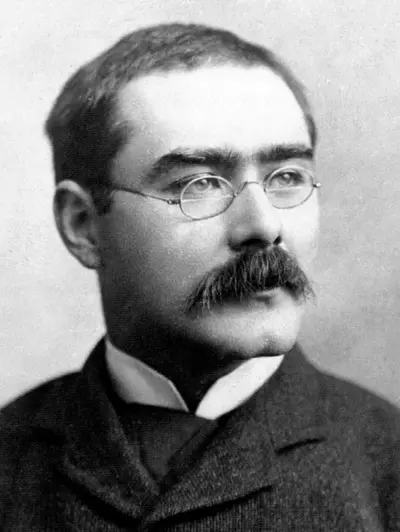
Joseph Rudyard Kipling was an English journalist, short-story writer, poet, and novelist. He was born in India, which inspired much of his work.
