Charles Trevelyan Quotes
However overwhelming the victory of our navy, our commerce will suffer terribly. In war too, the first productive energies of the whole people have to be devoted to armaments. Cannon are a poor industrial exchange for cotton. We shall suffer a steady impoverishment as the character of our work exchanges. All this I felt so strongly that I cannot count the cause adequate which is to lead to this misery. So I have resigned.
Charles Trevelyan, 1870-1958, Member of British Parliament (Liberal), Minister of Education, Letter to his constituents explaining why he had resigned on the decision of the Liberal Government to declare war on Germany, August 5, 1914
Sourced by: Eigen's Political and Historical Quotations

1st Viscount Grey of Fallodon

To a great extent, the same is true in our modern world.
He was writing about the impending First World War.

He was advocating peace and no expansionism, which led to military involvement.


Although an ordained Methodist Minister, the Methodist Episcopal Church refused to allow her to preach.

First woman elected to Congress. She was one of a handful of Congressman who opposed the WWI declaration. She was the only member of the House to oppose FDR’s request for a Declaration of War against Japan after Pearl Harbor.

Wilson was very candid that there would be high cost to war and sacrifice would be needed. See {584570} for other similar candor. This quotation was often used by critics of George W. Bush who initiated the Iraq War and then cut taxes for the rich, but then financed the war through the budgetary emergency appropriations bypassing the budget rules that the revenue must be specified to pay for it. His administration even claimed at an early stage in the war that the oil revenue from Iraq oil would defray the costs.


Honore Gabriel Victor Requiti

This quotation illustrated a military phenomenon whereby leading military commanders are important as long as they have and control many military assets. Therefore, they avoid serious battles where the might lose. Preserving assets becomes more important than the war objectives and honor and reputation trumps contribution to the war effort. History remembers well military leaders who battle and win. It also remembers leaders who control many assets and who do not lose or win. But the losing military leaders are consigned to the “dustbin of history”.

The Ambassador of Bavaria represented an area where the politicians saw democrats and socialists as their great enemy, as did many of the leading right wing conservatives in all of Germany. They believed that a great war would give them a chance to crush democratic socialism in Europe. Bethmann warned that just the opposite might result, and indeed it did. He was correct. Many of the crowned heads of Europe were deposed and the democratic socialists emerged as a major political factor in the victorious democracies. Bethmann-Hollweg, however, was not a strong leader and could not prevent the Conservatives, the military leaders, and Kaiser Wilhelm from initiating WWI.

Almost all economists believe that Harding had it totally wrong. WWII for example was one of the greatest increases in productivity in world history. The Civil War and the two world wars both were accompanied by many increases in industrial productivity. The losing side is usually totally devastated by war, and sometimes the winners are impoverished as with England and Russia in WWII. However, the North thrived in the Civil War and America did in WWII. Many economists say that war often impairs the economy of even a winning country in that the war expenditures generally are made at the expense of the civilian economy—infrastructure, public transportation, education, and in the decades following the war the lack of domestic investment in the war years reduces medium and long term growth.

English foreign and military policy had been so effective that English citizens had been completely sheltered from all the British military hostilities throughout the world. Keyserlingk and other German military planners, observing the effect that home public opinion had on war policies and practices, placed a high priority on bringing war to the British civilians and sinking merchant ships was the one way they had technologically open to them. Latter, in WWII, the same objective was achieved by the bombing of the Blitz—bombing of London and other cities with planes and rockets.

In the first year of WWI, the British Fleet kept the German Fleet bottled up in port. As a result, the British had a very successful sea embargo against the Germans who rarely challenged the British fleet even though they had some major, powerful, capital ships. See {642234}. Meanwhile, the German ships were in no position to harass much less destroy Allied (French, Russian or English) shipping.


England was the only power opposing Hitler led Nazi Germany, and they were being weakened daily by their unsupported military efforts.


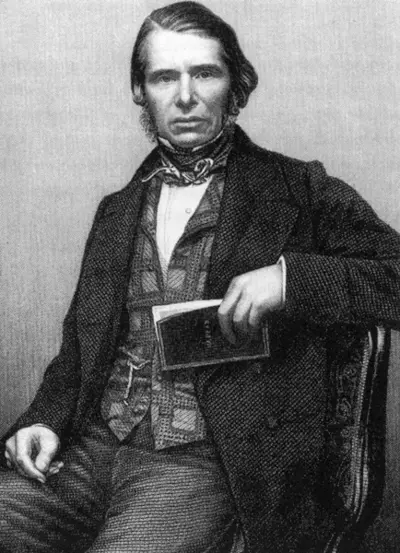
Sir Charles Edward Trevelyan, 1st Baronet, KCB was a British civil servant and colonial administrator. As a young man, he worked with the colonial government in Calcutta, India; in the late 1850s and 1860s he served there in senior-level appointments. Trevelyan was instrumental in the process of reforming the British Civil Service in the 1850s.
