Sun Tzu Quotes
There is no instance of a nation benefitting from prolonged warfare.
Sun Tzu, c. 400 BC, Chinese writer of the Age of Warring States, The Art of War
Sourced by: Eigen's Political and Historical Quotations


Almost all economists believe that Harding had it totally wrong. WWII for example was one of the greatest increases in productivity in world history. The Civil War and the two world wars both were accompanied by many increases in industrial productivity. The losing side is usually totally devastated by war, and sometimes the winners are impoverished as with England and Russia in WWII. However, the North thrived in the Civil War and America did in WWII. Many economists say that war often impairs the economy of even a winning country in that the war expenditures generally are made at the expense of the civilian economy—infrastructure, public transportation, education, and in the decades following the war the lack of domestic investment in the war years reduces medium and long term growth.


He was writing about the impending First World War.

The speech was addressed to those American imperialist forces that were supporting the war in the Philippines.


The Ambassador of Bavaria represented an area where the politicians saw democrats and socialists as their great enemy, as did many of the leading right wing conservatives in all of Germany. They believed that a great war would give them a chance to crush democratic socialism in Europe. Bethmann warned that just the opposite might result, and indeed it did. He was correct. Many of the crowned heads of Europe were deposed and the democratic socialists emerged as a major political factor in the victorious democracies. Bethmann-Hollweg, however, was not a strong leader and could not prevent the Conservatives, the military leaders, and Kaiser Wilhelm from initiating WWI.


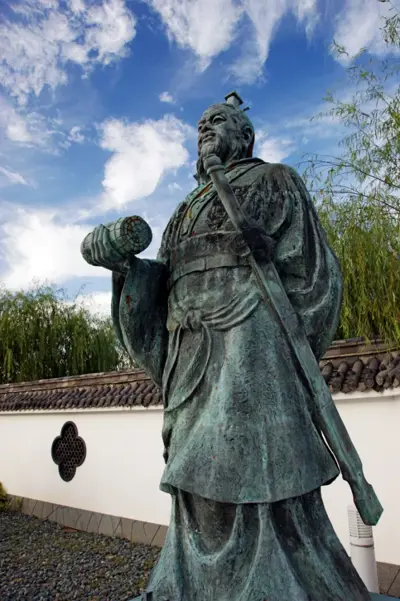
Sun Tzu was a Chinese general, military strategist, writer, and philosopher who lived in the Eastern Zhou period of ancient China. Sun Tzu is traditionally credited as the author of The Art of War, an influential work of military strategy that has affected both Western and East Asian philosophy and military thinking. His works focus much more on alternatives to battle, such as stratagem, delay, the use of spies and alternatives to war itself, the making and keeping of alliances, the uses of deceit, and a willingness to submit, at least temporarily, to more powerful foes. Sun Tzu is revered in Chinese and East Asian culture as a legendary historical and military figure. His birth name was Sun Wu and he was known outside of his family by his courtesy name Changqing. The name Sun Tzu by which he is best known in the Western World is an honorific which means "Master Sun".
