Roger Martival Quotes
We appoint you our representative with the power of canonical coercion to seek and receive in our name from whichever justiciars, viscounts, and bailiffs of the lord king or of anyone else, and also to seek and receive from whomsoever regardless of their name or office, all clerks who, for reason of felonies, crimes, or excesses, have been indicted or are about to be indicted, have been seized or are about to be seized, have been incarcerated or are about to be incarcerated for any reason, or have been detained or are about to be detained in custody or in chains; you shall seek and receive such clerks who by right ought to be and are able to be brought before us to receive justice in the ecclesiastical court according to the canonical sanctions.
A priest, friar or monk with this commission could and did, remove from the custody and control of the local judges, bailiffs and law enforcement officers clerics who had run afoul of the law. At the time the word “clerk” meant any churchman. The principle at the time was that the state could not judge or dispense justice or punishment to members of the church. Only the church could try and convict clerics and they did that persiant to cannon (religious) law. In theory, the bearer of this commission would take custody of an accused criminal who was a churchman, and bring him to the Bishop who would handle the case under Ecclesiastical Law. Often that meant, doing nothing or minor penitence for a crime that could even bring the death penalty under civil law. Historically there has been a major struggle in the West between the churches and civil governments that still goes on to this day in countries like Ireland. In America, the early 21st century saw the Roman Catholic bishops covering up crimes of sexual predation on the part of Priests. Many people were also outraged that the bishops did not report the Priests to the police, but this was unfortunately a throwback to this historical notion that the Church only can deal with the discipline and legal matters involving church personnel or property. Historically, reporting matters like this to civil authorities for handling is only about 200 years old, while the system illustrated by this quotation had been in place for about 1200 years before.
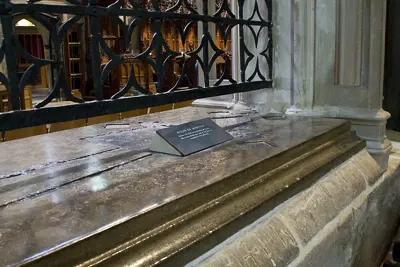
Roger Martival, ?-1330, English Bishop of Salisbury, Commission he gave to numerous assistants, 1315-1330
Sourced by: Eigen's Political and Historical Quotations

William the Conqueror. This is one of the earliest government action separating some church functions from state functions.


His positions presaged some of those of Protestants in the Reformation. In the great struggle of the time between the Pope and the Emperor, Marsilius was the leading advocate for the emperor’s superiority of authority. The Pope wrote a condemnation of these ideas.

Jefferson’s concern over issues of church state separation and independence was expressed early when he was a young lawyer.

Pen name: Jack Nipps

Curtis had at first arrested Samuel B. McPheeters a St. Louis preacher for pro-Southern sermons. Lincoln had countermanded the arrest order. Curtis released the pastor, but prohibited him from preaching in his own church. It took Lincoln many months to find this out and Lincoln then instructed this second instruction to Curtis not to continue the ban.

See {610517} for the Papal Bull which “gave” Ireland to England. There has been some dispute over whether this was a forgery to support the authenticity of the Papal Bull which itself was questioned.


This quotation illustrates how the power and mechanism of an established church operated to control ideas and maintain theological monopoly. In this case, no one could sell or rent any facility in the city to a cleric or church of any kind or persuasion without first having the approval of the Bishop who had theological control of that territory. Even Catholic scholars could not rent a room in the city unless their scholarship met with the Bishop’s approval. This was history with which the American Founding were very familiar, and wanted to avoid by adopting the 1st Amendment.

Note that in addition to getting rid of the authority of the King, New York—over a decade before the Bill of Rights and the First Amendment, provided for a ban on an established church or favoring one Christian sect over another. Even then New York was a multi religious and multi ethnic society with its strong Dutch tradition along with the English tradition. New York did not go as far as the First Amendment would do later in terms of freedom of religion. NY only mentioned Christian sects. However they did implement separation of church and state and an establishment clause. See {621429} for another clause that ensures separation of church and state.


This was before the state had officially sanctioned and accepted the church. Most of the institutions were pagan and the kings had subjects of both religions with Christianity not yet dominant. Yet among Christians, the Church had government temporal power, even before the church was allied with the state.

The clergy of the colonies were split on the American Revolution, but those clergy who supported the revolution made a huge contribution to the individual American’s intellectual view of the legitimacy of Parliament’s making laws governing the American Colonies. The anti-British clerics called for action while other forces of colonial America urged caution.

England had, under Henry VIII, left the Roman Catholic Church where the King replaced the Pope as head of the English Church. Henry’s successors then had to organize and manage the national Christian church. James was discussing the hierarchy of the Church of England and there was a suggestion that Bishops be eliminated and have every priest directly responsible to the crown. Bishops would be powerful figures who might form a power center. (They did later). However, King James I observed that the King is God’s choice and rules by divine right. So there had to be bishops to crown kings. The bishoprics were retained.

Of all the Western Colonial Powers, Spain was the worst. They took the most from their possessions and contributed the least. Worst, they killed off almost all the indigenous people.

This is one of the major reasons that the relations between police and the communities they are policing is so important. Also, the style and courtesy that the IRS tax collectors exhibit is very important.
This interesting historical quotation illustrates the fact that in almost every American generation there are those who believe that society has gone too far in protecting the rights of criminal suspects at the expense of law and order in the general society. This is nothing new. This is a classic argument given by those who would deny a defendant the Constitutional protection against self-incrimination. The belief that an innocent man has nothing to fear from the police is refuted by the many cases of innocent men being convicted by evidence they have given in the belief that they were innocent, and served long jail sentences only to later be proved by DNA evidence that they could not possibly have been guilty. Since Nott’s day, society has not only found many cases where honest error was made by the police or prosecutors, but many where there was venal prosecutorial misconduct and defendants were jailed even though the authorities were aware of evidence of innocence and kept it secret. There have been a number of these cases where a defendant was on death row and about to be executed when it was found he was innocent. Probably there have been men wrongly executed. See {629444} for a probable example.