Martin Luther Quotes
Priests, Bishops, and Popes … are neither different from other Christians nor superior to them.
Martin Luther, 1483-1546, German Theologian & Founder of Protestantism, Quoted in Gary Willis, Why Priests, 2013
Sourced by: Eigen's Political and Historical Quotations

His positions presaged some of those of Protestants in the Reformation. In the great struggle of the time between the Pope and the Emperor, Marsilius was the leading advocate for the emperor’s superiority of authority. The Pope wrote a condemnation of these ideas.

The Roman Catholic Clergy as well as the Vatican was quite corrupt in Luther’s time which was one of the reasons for his reform effort. Throughout history some clerics have abused their positions and roles and acted as impediments to the faith in their own religions.

The clergy of the colonies were split on the American Revolution, but those clergy who supported the revolution made a huge contribution to the individual American’s intellectual view of the legitimacy of Parliament’s making laws governing the American Colonies. The anti-British clerics called for action while other forces of colonial America urged caution.

This quotation, 500 years later, would be used by American anti-Catholics to justify their antipathy to the Catholic Church. This was about a most undemocratic statement about the common man and his capabilities which was completely counter to the American view. The fact that it was 500 years past or that many American Catholics did not believe it or that even if they did, it was restricted to matters of theological faith, was not considered by the Know-Nothings and others.


New York State was so concerned about the separation of church and state that they would not allow any religious cleric or official, to serve in any position of the state militia or government. Delaware had earlier placed the same prohibition against clerics serving in any branch of the government. See {621428} The Bill of Rights did not go that far, but there are a few religions that also support this notion. Perhaps the most dramatic example was Pope John Paul’s prohibition of Priests running for elective office.


The Islamic Holy Book even recommends against friendships with Christians and Jews. See {584381}.

Some of the founding fathers were deeply religious men while others were not so. Some varied in their believes at different times of their lives, and a number were not very favorable towards orthodox religion. At the time, Roman Catholic and Protestant churches were persecuting other religions throughout Europe and people were still being killed for their heretical beliefs. Most important to some of them, kings and other monarchs whom they abhorred, all at the time claimed the Divine Right of Kings and the established churches were the most important support for monarchs. At the time most organized religions were opposed to freedom of conscience and certainly opponents of separation of church and state. American churches tended to take on American values but were never given the chance to dominate the American government they way many had in Europe and the rest of the world.


Alfonso the Learned. He personally wrote a History of Spain up to the time.


Ingersoll was considered to be the greatest orator and political thinker of his day, but his overt atheistic views curtailed his elected political career.

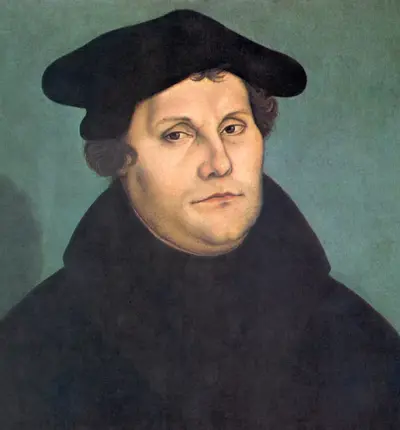
Martin Luther, O.S.A. was a German professor of theology, priest, author, composer, Augustinian monk, and a seminal figure in the Reformation. Luther was ordained to the priesthood in 1507. He came to reject several teachings and practices of the Roman Catholic Church; in particular, he disputed the view on indulgences. Luther proposed an academic discussion of the practice and efficacy of indulgences in his Ninety-five Theses of 1517. His refusal to renounce all of his writings at the demand of Pope Leo X in 1520 and the Holy Roman Emperor Charles V at the Diet of Worms in 1521 resulted in his excommunication by the pope and condemnation as an outlaw by the Holy Roman Emperor.
