James Bowdoin Quotes
Vindicate the insulted dignity of government.
In 1780 Daniel Shays organized several hundred Massachusetts farmers to march on Springfield. The picked up more support including militia members as the marched. The governor asked the legislature for authority to deal with the situation.
James Bowdoin, 1726-1790, Governor of Massachusetts, 1780
Sourced by: Eigen's Political and Historical Quotations

His assumption about whether an army was “willing or able to train its guns on inoffensive people” was a little naïve. The Ottomans had massacred the Armenians, and soon the German troops would murder innocent civilians. As did the Japanese. The Russian Communists on many occasions massacred civilians engaging in passive resistance. In Cambodia, the Kmer Rouge Army killed almost 2 million, most of whom had educations which might have made them passive resisters. Islamic Fascist governments like Syria and Iran used heavy weapons to kill citizens in their own homes because they were in neighborhoods that housed many passive resisters. Extreme Islamic Fundamentalist Terrorists regularly killed innocent civilians in their homes, on the streets or in busses, just to intimidate others to surrender to their religious and political demands. He was right that democratic governments and armies would not engage in such killing of their own people, but there are unfortunately still many other governments.

3rd Viscount Palmerston. France has had, ever since their bloody revolution, factions that were for revolution and factions for stability have both always existed.


Spinoza was one of the most feared intellectuals in human history—feared that is by the established power structures. He is the only known person who was excommunicated by the Catholics, the Jews and the Muslims—all were forbidden to read his works. He was the enemy of authority and advocated personal reason as the guide for men.

Smith and his Mormon followers had been attacked and persecuted by mobs in various communities for availing themselves of their constitutional rights to follow their own religion. In those days the governor did not have command of a national guard and had to ask the President for troops to put down a mob or insurrection. Some Governors were in sympathy with the mobs and would do nothing to protect the Mormons. Smith had written to most of the then likely Presidential candidates of both major parties asking for their position on the Mormons who were facing persecution wherever they went. None of the politicians would make any satisfactory commitments. Smith took Direct Action and became the only major religious official to have run for the Presidency of the United States until Pat Robertson tried and failed in 2000. Smith’s assassination shortly thereafter cut his run for the Presidency short before it made much headway and politically he had no chance to affect the race.


The State Police then attacked the demonstrators with night sticks, bull whips and tear gas. The demonstrators were trying to cross the bridge to Montgomery. There was no legal Constitutional way that the marchers could be stopped, but the Alabama State Police then constantly violated the law.

The non-violent resistance tactics of the White Rose were so threatening to the Nazi German regime that Sophia and other members were executed by guillotine beheading as a particularly harsh example. The graphic is a postage stamp that Germany has issued in her honor.

As a result was in 1799 he was indicted, convicted, and fined $480 and sentenced to 18 months in jail. In 1801, newly elected President Thomas Jefferson pardoned Brown along with all violators of the act.


He was forgiving them after his troops had killed some protesters the previous “Bloody Sunday” just for protesting their working conditions. See {613674} for how callous he was regarding demonstrators.


at the fall of the Soviet Union


Several years before the Battle of Bunker Hill, revolutionary activity had already broken out in the American colonies—See {634132} for an example. This law gave the British authorities much more “clout” in dealing with the “seditious” American activities. It protected English law enforcement officials from being tried in local Colonial courts for murder or assault in putting down insurrections. George Washington and other Patriots were outraged over this law. See {634131}.

This quotation was documented by an FBI illegal wiretap of King and his associates. The illegal wiretap had been insisted upon by FBI Director J. Edgar Hoover who was a racist and somewhat of a paranoid about communists. However, Attorney General, Robert F. Kennedy personally approved the illegal wiretap.
Louis Napoleon had seized control of France and had very little popular support amongst the aristocracy and middle class. However, the Socialists leading the uprisings frightened them more than Louis Napoleon as the Socialists had the support of the peasants who resented the abuses of the aristocracy and many of the middle class. This was true class warfare and not at all what was possible in the United States when American conservatives would claim “class warfare” when there was a move for more progressive taxation. In Europe, class warfare really meant death and destruction, so for many who knew the history, the claim of “class warfare” was frightening and a large part of the “Red Scare” in the United States.


By producing growth and an increasing standard of living and universal education, capitalism’s citizens have the time, education, and resources to protest and produce social unrest. However, that assumes that there is also a democratic state. For Schumpeter and many others, capitalism and democracy go hand in hand, but many point to historical examples of one developing faster than the other.
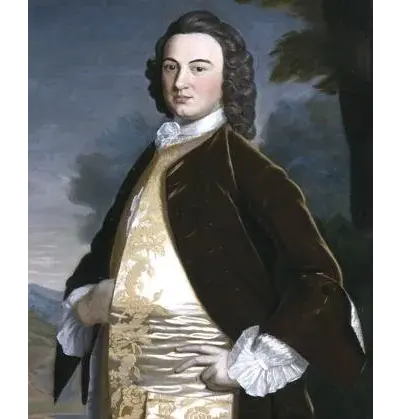
James Bowdoin II was an American political and intellectual leader from Boston, Massachusetts, during the American Revolution and the following decade. He initially gained fame and influence as a wealthy merchant. He served in both branches of the Massachusetts General Court from the 1750s to the 1770s. Although he was initially supportive of the royal governors, he opposed British colonial policy and eventually became an influential advocate of independence. He authored a highly political report on the 1770 Boston Massacre that has been described by historian Francis Walett as one of the most influential pieces of writing that shaped public opinion in the colonies.
