Joseph Schumpeter Quotes
Capitalism is so successful economically that it creates, educates and subsidizes a vested interest in social unrest.
By producing growth and an increasing standard of living and universal education, capitalism’s citizens have the time, education, and resources to protest and produce social unrest. However, that assumes that there is also a democratic state. For Schumpeter and many others, capitalism and democracy go hand in hand, but many point to historical examples of one developing faster than the other.
Joseph A. Schumpeter, 1883-1950, Austrian Economist, Capitalism, Socialism, and Democracy, 1942
Sourced by: Eigen's Political and Historical Quotations


Webster was taking regular bribes from large corporations and even complained when his payments were late. So he might have had a pro-large business bias. At the time taking bribes even if there was a quid pro quo was not illegal or even “unethical” by then Congressional rules.

This was an honest theoretical belief of Mises. However, most of the criticism of capitalism in the industrial democracies is precisely the lack of unemployment and sustenance for all. When it does, even complaints about inequality tend to be minimal. But some capitalist societies never provided these, and by the 21st century, no capitalist nation was able to do so permanently without recessions and depressions.

Brooks was commenting on the “Occupy Wall Street” demonstrations against Financial Corporate greed.


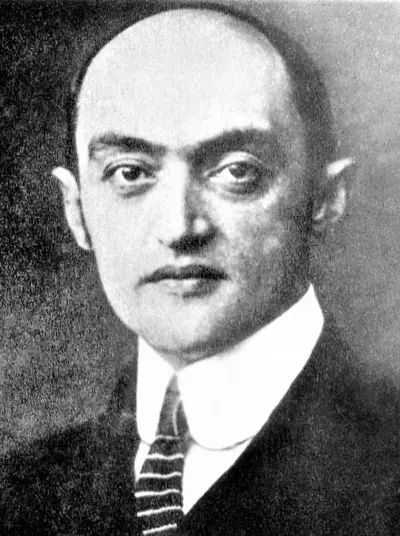
Joseph Aloïs Schumpeter was an Austrian political economist. Born in Moravia, he briefly served as Finance Minister of Austria in 1919. In 1932, he became a professor at Harvard University where he remained until the end of his career, eventually obtaining U.S. citizenship. One of the most influential economists of the 20th century, Schumpeter popularized the term "creative destruction" in economics.
