Isoroku Yamamoto Quotes
There is no pride in attacking a sleeping enemy.
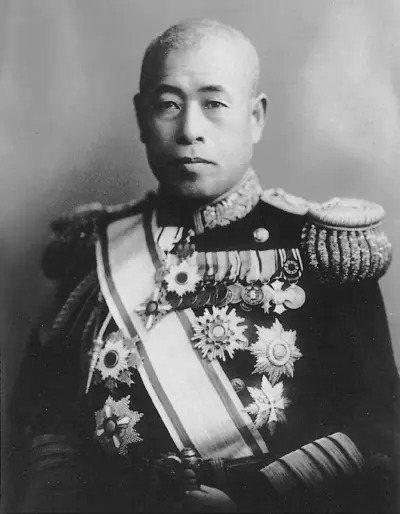
Yamamoto planned and commanded the Japanese attack on Pearl Harbor. However, he thought that the Japanese Declaration of War would be delivered in Washington before the attack as was required then by the international rules of war. The Japanese Government however did not deliver the war declaration until after the attack. Yamamoto was not only distressed about the non delivery but was concerned that the “sneak attack” was going to motivate the Americans to an all out war, when the Japanese strategy had been to negotiate a rapid peace giving them more freedom of action in the Pacific. Yamamoto was right. “Remember Pearl Harbor” became the rallying cry, and America would accept no peace other than Japanese Unconditional Surrender.
Isoroku Yamamoto, 1884-1943, Japanese Admiral, Commander in Chief of the Japanese Navy, Statement about his attack on Pearl Harbor, Quoted on The History Channel. Tora, Tora, Tora: The Story of Pearl Harbor, December 7, 2011
Sourced by: Eigen's Political and Historical Quotations

It was this code, and its implementation in Saipan, Okinawa, and other Japanese held islands taken by the allies that caused Japanese soldiers to fight to the death or commit suicide. The prospect of this code being followed by Japanese soldiers, civilians or both in an invasion of the Japanese mainland, was one of the major arguments in favor of dropping the Atomic Bomb in World War II.

After the sneak attack on Pearl Harbor, Stimson drafted the Declaration of War that President Roosevelt would ask Congress to vote for. However, there was a small but very vocal group of extreme Republican conservatives who opposed assisting England against Hitler and saw German and Italian Fascism as positive forces. They would oppose any administration declaration of war against Germany and Italy who had not yet attacked any American facilities. The President realized that German and Italy had a Mutual Defense Treaty with Japan, and when we declared war against Japan, would have to ally with Japan or reneg on their treaty. So FDR removed Germany and Italy from the Declaration and Congress just declared war against Germany. In the next days, Germany and Italy declared war against the United States, and the de facto situation was as Stimson had drafted it, but FDR had not given the right wing American Fascist sympathizers any issue to criticize the administration.

He was leading the Gordon Highlanders of the British Army against the Boers during the Boer War. He was seriously wounded and could not go on himself with a charge he had ordered, However, waifing his sword he made this famous qutation. Particualrly noteorthy is the derrogatory terms which he used to describe the enemy--the Boers of South Africa. In many wars and cultures, one or more of the combatants, in order to overcome the avarage soldier's reluctance to kill an enemy, characterizes them as less than human. In this case, vermin, who were to be exterminated. There were two predominant groups of whites who came to South Africa, the English who were generally well-educated and were interested in trading with the exhisting inhabitants and investing in businesses using mostly native labot and the Boers. The latter were of Dutch and German origin, poor farmers with little or no land in the home country and little education. Their interest was to create a nation where they could own land to farm. And the lest expensive way for them to increase their farmland was to sieze it from the native Blacks and who were the major forces behind the racial discrimination which became apartheid. The British contolled the government and sought stability and as in most of the British Empire, they wanted English law to prevail including the rights of the Black natives. The Boers had left Europe for good and would thrive or not in Southern Africa. Proportiopnately, the English might have a career in South Africa or serve there for a few years. They were Englishmen in a foreign country. The Boers saw themselves as citizens of Southern Africa who were fighting the native Blacks for control of the land. The English legal system would not allow any of the land seizures and political discrimination that the Boers saw as existential for their survival in Africa. Soon, the Boers took more and more of the law into their own hands and saw English rule and dmination as inimical to their interests in Africa and they tried to create their own independent states in Southern Africa. That was the essense of the Boer Wars. Dick-Cunyngham was awarded the Victoria Cross, the highest military decoration of Great Britain, for his exploits in the Afghan War.


What is particularly interesting about this quotation is that it shows the role that vengeance played in the support of the war effort. Revenge is a “baser” motive than making the world safe for democracy or preserving freedom or stopping dictators. Yet the political and military leadership did not shy away from revenge as a war aim. Contrast this with later wars. Arguably the sneak attack on Pearl Harbor created a different dimension than existed in the Korean or Vietnam wars. Yet in the War on Terror, the attack of 9-11, created a situation like Pearl Harbor did. Yet President Bush and other political and military leaders had a definite policy of never acknowledging that revenge was a factor, despite the fact that many Americans openly saw this as a major war aim.

The proverb dates from the Samurai era of Japan where the Samurai in battle wore metal and leather protective helmets. These were secured to their heads by a tight helmet chord. Many societies, after a war and desiring peace would reduce the spending for the military, eliminate conscription, and weapons production. The result often was a more attractive target for enemies wanting land or revenge. Thus, the proverb warns that immediately after a victory, prepare for the next battle and do not let your guard down.

Some say that President Roosevelt had instructed the war department to issue warnings to the military forces in the Philippines and the Pacific. Military intelligence argued against the Japanese attack on the Philippines—and did not think any attack anywhere very likely. When the president insisted, warnings went out and this is what was sent to General Short. The warning was ambiguous and Short did very little and was caught unprepared shortly thereafter. How much reliance should be placed on intelligence estimates has been a question that has been argued before World War II and after.


The prisoners would be beaten and cut with swords. If they fell down, they would be bayoneted or beheaded as shown in the graphic—an actual photograph of the time.

The Senator was an Army sergeant fighting in Europe during WWII. He and a unit of Japanese American had volunteered to fight for America at the same time as many other Japanese Americans – American Citizens -- on the West Coast were interned in camps and denied the very rights we were fighting to preserve. The internment was one of the most regrettable mistakes in American history.
It was then customary to return with the head of a killed Samurai which would be made up as if in life so the dead man could be recognized. That way, the victor received more recognition with the importance of the Samurai who he defeated.

This statement is perhaps the greatest and most eloquent description of the United States exceptionalism and its behavior in WWII. Such a statement could only come from a non-American.
Under the Jay Peace Treaty for the American Revolution, the Iroquois were recognized as an Independent Nation. (5 of the tribes fought for the British and 1 for the Colonists which is why the Iroquois were one of the subjects of the peace treaty. In 1942. the Iroquois wanted to maintain their own sovereignty and so they made their own declaration of war in WWII. Then Iroquois men then enlisted in the American Armed Forces. The Iroquois had made their own separate Declaration of War in WWI as well.


Lacedaemonian refers to the ancient Greek city of Sparta,

Halsey was a big supporter of the use of the Atom Bomb against Japan. His ships had battled the Japanese navy from Pearl Harbor to Japan’s eventual surrender and had seen the cruelty of the Japanese occupation and aggression throughout the Pacific. His ships were the first to be sunk by Kamikaze suicide pilots at the Battle of Leyte Gulf where over 3000 American sailors were killed in the battle that finally destroyed the Japanese Navy’s ability to wage war.

During WWII, Mauldin was at the front lines and in the fox holes with the troops getting ideas for his cartoons most of which were drawn on the battle field;

Japanese military culture of the time was that a soldier who surrendered, even if wounded, was totally dishonorable and therefore could be abused and killed. The American marines then retaliated, and after that, the Americans also took no live prisoners contrary to American military regulations. This incident shows how difficult it is to maintain military professional standards and regulations if the other side does not. Similar situations existed in most American wars, but by the end of the 20th century, the all volunteer military had become much more professionalized and disciplined, and there were relatively few American atrocities despite many provocations.

World War I World War II
