Isoroku Yamamoto Quotes
A military man can scarcely pride himself on having smitten a sleeping enemy; it is more a matter of shame, simply, for the one smitten.
Agawa, Hiroyuki. The Reluctant Admiral: Yamamoto and the Imperial Navy. Kodansha International, 1979, p. 268.


It was this code, and its implementation in Saipan, Okinawa, and other Japanese held islands taken by the allies that caused Japanese soldiers to fight to the death or commit suicide. The prospect of this code being followed by Japanese soldiers, civilians or both in an invasion of the Japanese mainland, was one of the major arguments in favor of dropping the Atomic Bomb in World War II.


Referring to Senator Joseph R. McCarthy:


It was then customary to return with the head of a killed Samurai which would be made up as if in life so the dead man could be recognized. That way, the victor received more recognition with the importance of the Samurai who he defeated.


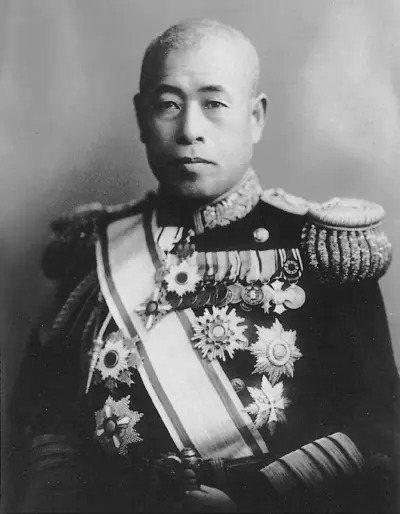
Yamamoto planned and commanded the Japanese attack on Pearl Harbor. However, he thought that the Japanese Declaration of War would be delivered in Washington before the attack as was required then by the international rules of war. The Japanese Government however did not deliver the war declaration until after the attack. Yamamoto was not only distressed about the non delivery but was concerned that the “sneak attack” was going to motivate the Americans to an all out war, when the Japanese strategy had been to negotiate a rapid peace giving them more freedom of action in the Pacific. Yamamoto was right. “Remember Pearl Harbor” became the rallying cry, and America would accept no peace other than Japanese Unconditional Surrender.

Lacedaemonian refers to the ancient Greek city of Sparta,

He was leading the Gordon Highlanders of the British Army against the Boers during the Boer War. He was seriously wounded and could not go on himself with a charge he had ordered, However, waifing his sword he made this famous qutation. Particualrly noteorthy is the derrogatory terms which he used to describe the enemy--the Boers of South Africa. In many wars and cultures, one or more of the combatants, in order to overcome the avarage soldier's reluctance to kill an enemy, characterizes them as less than human. In this case, vermin, who were to be exterminated. There were two predominant groups of whites who came to South Africa, the English who were generally well-educated and were interested in trading with the exhisting inhabitants and investing in businesses using mostly native labot and the Boers. The latter were of Dutch and German origin, poor farmers with little or no land in the home country and little education. Their interest was to create a nation where they could own land to farm. And the lest expensive way for them to increase their farmland was to sieze it from the native Blacks and who were the major forces behind the racial discrimination which became apartheid. The British contolled the government and sought stability and as in most of the British Empire, they wanted English law to prevail including the rights of the Black natives. The Boers had left Europe for good and would thrive or not in Southern Africa. Proportiopnately, the English might have a career in South Africa or serve there for a few years. They were Englishmen in a foreign country. The Boers saw themselves as citizens of Southern Africa who were fighting the native Blacks for control of the land. The English legal system would not allow any of the land seizures and political discrimination that the Boers saw as existential for their survival in Africa. Soon, the Boers took more and more of the law into their own hands and saw English rule and dmination as inimical to their interests in Africa and they tried to create their own independent states in Southern Africa. That was the essense of the Boer Wars. Dick-Cunyngham was awarded the Victoria Cross, the highest military decoration of Great Britain, for his exploits in the Afghan War.


World War I World War II
