Daniel Inouye Quotes
We were taught to kill the enemy. They were evil. We were doing something good.
The Senator was an Army sergeant fighting in Europe during WWII. He and a unit of Japanese American had volunteered to fight for America at the same time as many other Japanese Americans – American Citizens -- on the West Coast were interned in camps and denied the very rights we were fighting to preserve. The internment was one of the most regrettable mistakes in American history.
Daniel Inouye, U. S. Senator (Democrat, HI), Ken Burns, PBS The War, September 26, 2007
Sourced by: Eigen's Political and Historical Quotations

The Chinese were massacred when the Japanese invaded with atrocities against civilians that were inconceivable until Hitler began his in Europe. However, there were many Chinese we worked against the Japanese including the Communists who made a truce with Chiang (see {636322}) so that they could oust the Japanese invaders.


Westmoreland’s critics point to this quotation as an illustration of exactly why he was the wrong man for the job. As Vietnam Supreme Commander, he controlled more firepower than any other military leader in history and yet he had “no room” for thought or reason much less mercy. Subsequent commanders of U. S. military efforts were much more sophisticated like, Colin Powell, Norman Schwarzkopf, and Wesley Clark who were leading American thinkers, sophisticated at political and military reasoning and very capable of mercy. The modern American military requires men and women who are skilled at thinking and reasoning.


Debs was jailed for sedition for this speech.

In contrast to the American army, there was no conscription in Canada. Note the quaint Canadian euphemism, "invited."


This would be like an American President firing the congressional chaplains. However this is only one small, but telling, example of Atatuk’s secularization of the nation which had a great deal to do with Turkey becoming a modern great power—by far the strongest and most developed of the Islamic world.

He was leading the Gordon Highlanders of the British Army against the Boers during the Boer War. He was seriously wounded and could not go on himself with a charge he had ordered, However, waifing his sword he made this famous qutation. Particualrly noteorthy is the derrogatory terms which he used to describe the enemy--the Boers of South Africa. In many wars and cultures, one or more of the combatants, in order to overcome the avarage soldier's reluctance to kill an enemy, characterizes them as less than human. In this case, vermin, who were to be exterminated. There were two predominant groups of whites who came to South Africa, the English who were generally well-educated and were interested in trading with the exhisting inhabitants and investing in businesses using mostly native labot and the Boers. The latter were of Dutch and German origin, poor farmers with little or no land in the home country and little education. Their interest was to create a nation where they could own land to farm. And the lest expensive way for them to increase their farmland was to sieze it from the native Blacks and who were the major forces behind the racial discrimination which became apartheid. The British contolled the government and sought stability and as in most of the British Empire, they wanted English law to prevail including the rights of the Black natives. The Boers had left Europe for good and would thrive or not in Southern Africa. Proportiopnately, the English might have a career in South Africa or serve there for a few years. They were Englishmen in a foreign country. The Boers saw themselves as citizens of Southern Africa who were fighting the native Blacks for control of the land. The English legal system would not allow any of the land seizures and political discrimination that the Boers saw as existential for their survival in Africa. Soon, the Boers took more and more of the law into their own hands and saw English rule and dmination as inimical to their interests in Africa and they tried to create their own independent states in Southern Africa. That was the essense of the Boer Wars. Dick-Cunyngham was awarded the Victoria Cross, the highest military decoration of Great Britain, for his exploits in the Afghan War.


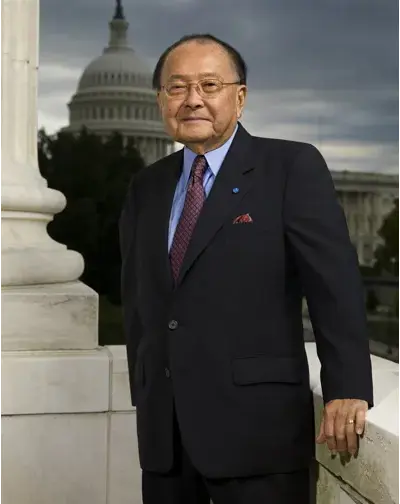
Daniel Ken Inouye was a United States Senator from Hawaii from 1963 until his death in 2012. A member of the Democratic Party, he was President pro tempore of the United States Senate (third in the presidential line of succession) from 2010 until his death. Until the inauguration of Kamala Harris as vice president in 2021, Inouye was the highest-ranking Asian-American politician in U.S. history. Inouye also chaired various Senate Committees, including those on Intelligence, Commerce and Appropriations.
