Philip Hone Quotes
There has been of late great excitement in consequence of the proceedings of a set of fanatics who are determined to emancipate all the slaves by a coup de main, and have held meetings in which black men and women have been introduced. These meetings have been attended with tumult and violence…. The police at length interfered, rather tardily, I should think; but the diabolical spirit which prompted this outrage is not quenched, and I apprehend we shall see more of it.
Philip Hone, 1780-1851, Mayor of New York City (Democrat), Diary, July 10, 1834
Sourced by: Eigen's Political and Historical Quotations

Darwin was then a very young man, who had personal witnessed the slavery in South America and the Caribbean when he was on his famous expedition on HMS Beagle. See {630961} & {630962}. He was so disgusted with slavery that he hoped there would be armed slave revolutions and takeovers as had occurred in Haiti. Many of the English upper classes were radical when it came to slavery.


This prophecy written in the later years of Jefferson’s life turned out to be all too true. St. Domingo was an Island in the Caribbean where slavery produced a bloody war. The American Civil War would be far worse.


The last lines of the editorial were tragically accurate in predicting the Civil War. The more the slavery question was debated in the nation, the more polarized the country became. If the South would persist in trying to curtail men’s freedom and maintain slavery, the slaves had the same right of revolution and insurrection as was established in the American Revolution. That was the view of most abolitionists. Southern slave holders, feared an armed slave rebellion more than anything else, and observed that debating the issue of slavery was just riling up Blacks and whites and would instigate such armed revolutions. The Southern solution was to cease debating the slavery question. The Northern solution was to end slavery. Neither side would accept the solution of the other and the Civil War ensued.

One of the interesting arguments made against slavery prior to the Civil War was that as the proportion of slaves increased in America in general and the South in particular, the security risk from a slave rebellion increases markedly to the point that it was just too risky. John Brown’s small attempted slave revolt at Harpers Ferry put the entire state of Virginia in a panic and Virginia had relatively few slaves compared with deep South states.


In 1856 Kansas was at war over slavery. Kansas was to enter the Union with the resident men voting to determine whether it would be a slavery state or a free state. At first pro-slavery forces sent men into Kansas to increase the pre-slavery vote. The abolitionist anti-slavery forces outside of Kansas did the same, and had more money to finance anti-slavery settlers. Soon the pro-slavery forces, realizing that they would be outnumbered turned to violence and began to intimidate abolitionist settlers to return from whence they came. Soon abolitionists were killed and the anti-slavery men retaliated. Soon real war broke out but terrorism was the modality on most attacks as the purpose of the pro-slavery men was to frighten the abolitionists—many of whom were religious pacifists—into leaving the state. Brown and some other abolitionists retaliated with terror of their own, but Brown was rabid. He and his sons, attacked 5 pro-slavery fighters at Pottawatomie Creek, but Brown personally hacked off their limbs with a broadsword and left the bodies to intimidate and terrorize many of the pro slavery people. Brown was such a fanatic that he, in this infamous quote, claimed that his killing and butchery was “justified under the circumstances.” The phrase “Bleeding Kansas” came from the violence and terrorism in this period.
There indeed were although the Southerners tended to exaggerate the numbers. However, the more slavery was debated, the more many of the abolitionists came to believe that insurrection and slave rebellion was not only morally justified but was the only recourse that was left by the racist intransigence of the Southern slave holders and politicians.

This fear was great among many who were abolitionists as potentially there might be mass slaughter of all Southern whites.

It was not successful militarily and Brown and his followers were hanged, but they rapidly became martyrs to the cause of freedom and abolition. As such they inspired not only abolitionists but many of the Northern soldiers in the Civil War. There were verses to the Battle Hymn of the Republic which were often sung by the Union Troops.”


Although escaped slaves could not fight for the North, they could be very useful on road building and other military engineering projects needing labor. Every time a slave escaped, it diminished the military engineering labor of the Confederates by one but added to that of the Union. Pinkerton and others however engaged many escaped slaves who volunteered for an incredibly dangerous mission. They returned back to the Southern lines into the slave work gangs, and organized slave escapes of groups of Blacks. In addition, many of them, by observing and overhearing the Confederate soldiers gained information regarding supply and troop levels and movements, and this they brought back to the Union officers. Those that were caught were executed as spies. Escaped slaves were espionage and covert operations agents before they were allowed to be soldiers.

Brown was executed for trying to steal federal arms and start a slave rebellion. However, to many Americans, his moral judgment was correct. He became a martyr for many abolitionists, and some Northern Civil War songs extolled him and saw his as an early forerunner of a great moral struggle. See Thoreau {633849} as an example. There were many other Americans who were abolitionists and did not approve of either of the method his violent raid or its purpose of arming the slaves as they feared a bloodbath of vengeance.

The Southerners were terrified at the thought of runaway and freed slaves as soldiers for the Union Army—even moreso than the Union leadership assumed. The Southerners knew far better than the Northerners how badly the slaves had been brutalized and assumed that the Blacks would want the same kind of revenge that they would seek if the roles were reversed.
This was America’s first emancipation of slaves. It was not done so much for the principle of equality or rights of slaves, but as an intimidation technique applied to the rebellious Americans.


This was one of the several early unofficial Emancipations that was issued in the Civil War.
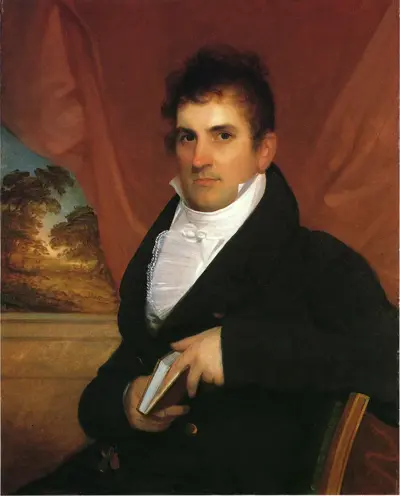
Philip Hone was Mayor of New York City from 1826 to 1827. He was most notable for a detailed diary he kept from 1828 until the time of his death in 1851, which is said to be the most extensive and detailed on the first half of 19th-century America.
