Thomas Wentworth Higginson Quotes
The most formidable weapon in the hands of slave-insurgents is always this blind panic they create, and the wild exaggerations which follow. The worst being possible, everyone takes the worst for granted.
The Southerners were terrified at the thought of runaway and freed slaves as soldiers for the Union Army—even moreso than the Union leadership assumed. The Southerners knew far better than the Northerners how badly the slaves had been brutalized and assumed that the Blacks would want the same kind of revenge that they would seek if the roles were reversed.
Thomas Wentworth Higginson, 1823–1911, Unitarian Minister, Author, Abolitionist, Feminist, Reformer & Soldier, Observation of Union freed slave Black Soldiers in the Civil War, “Nat Turner’s Insurrection”, The Atlantic Monthly, August 1861
Sourced by: Eigen's Political and Historical Quotations

When the Confederate Government realized that the Union was planning to arm escaped slaves and induct them into the Union Army, they quickly passed a law that declared any escaped slave who joined the Union Army or wore its uniform was guilty of Treason and would be executed. Most Union Generals one way or another got word to the Confederate Officers that they had better treat all Negro Union Soldiers as prisoners of war. Even President Lincoln warned the South. Butler, however, had a large number of Negro troops in his area and had heard threats of some of the Southerners to execute Black prisoners of war. He had a way of making things very clear, and he was able to prevent murder of any of his Negro troops despite the Treason law.

This letter was signed by a local white Priest and two other leading planters. This quotation gives us a marvelous feeling for what occurred when parts of the South was occupied by the Union Army shortly after the Emancipation Proclamation was issued. Minor and his fellows just did not “get it.” The concept of freedom of the slaves was intellectually so foreign to them, that they wanted the Union Army to “compel” the freed slaves to work. They were horrified that slaves went wherever they wanted, and they were most outraged when former slaves who had enlisted in the Army, would “visit” their old plantation setting such a terrible example. The letter gives us a perspective on how difficult it was to change the mental set of Southern Whites and why Reconstruction was so difficult. The year of the letter is somewhat uncertain as the original letter appears to be dated 1862 but the writing is not clear and that date does not comport with the history of the era and we believe 1863 was the correct year. The photograph is of the first official colored troops mustered into the Union Army. They were called the Louisiana Native Guards and contained the ex slaves who went over to the Union side just before the time this slave owner complained. These ex slaves, in uniform, and with arms would sometimes visit the plantations where they and been enslaved, thrilling the remaining slaves and infuriating owners like Minor.

It is not known what actually happened thereafter. However, from the intensity of this letter, it is likely that unless Rice was killed or wounded in battle, he went to get his daughter and deal with her “owner”. An interesting side note is that the slave owner actually sent the letter to the Commanding Union General Rosecrans complaining. The mental set of Southern Slave Owners was incredible to us today, but that is one of the reasons that Reconstruction was so difficult. Southerners could not see anything that they did that was wrong. Unfortunately, there are a few racist people with those views still in America plus many throughout the world.


In 1831 a slave preacher, Nat Turner, led a rebellion in North Carolina killing over 50 white men, women and children. Even though Turner and the rebels were captured and executed, whites throughout the South, took vengeance on any slaves they could find.
The reason for the initial total killing policy was that the slaves had no arms. Their plan was for a small band to attack a plantation, seize the owner’s arms, free his slaves enlarging the “army”, and going on to the next plantation. The reason for the total killing of the whites was to prevent a survivor running to the authorities and mounting a counter attack on the slaves while they still had few guns. The plan was to form an armed slave army and then fight a conventional battle. Ironically, one white who was wounded and spared actually did reach the authorities and Turner’s band was attacked before they had sufficient weapons to put up a serious fight.

This fear was great among many who were abolitionists as potentially there might be mass slaughter of all Southern whites.


His fear was well founded. That is exactly what the British tried to do.


She was one of the early abolitionists. Despite the Southern attempted repression of information of slave resistance, some of the facts emerged and were well known in the North. The South tried to suppress these incidents lest other slaves get ideas from it. Also the Southerners often maintained that Africa was so primitive and underdeveloped, that the slaves were better off in America; these actions of rebellion belied this notion.

The point about the negroes who were born into American slavery being less aggressive than those captured and transported to America is often overlooked. Slavery not only was cruel, moral, and inhuman in its own right, but also took its toll over generations as a result of the psychological effects of the terror of slavery. Despite these, it is amazing how resiliant the American Blacks were under those circumstances. in some cases one or two saves escaped after committing a violent act as they had little to lose for trying as they wold be killed if caught. A few of these escaped to the North and others reached Southern Cities like Charleston where there was a small free black community in which they could be absorbed.

By 1863, Negro troops were being used to fill in gaps in the Union forces. Many union generals resisted having colored troops under their command. Thomas, however, welcomed them, and won several major battles where black soldiers were instrumental in victory.


Benjamin was the Confederacy’s strongest proponent for use of Negro troops in exchange for a promise of freedom. Ironically, the racial prejudice of the Southern soldier may well have doomed the South’s last chance for independence. Lee, although he personally favored such a course of action, could not get a general sentiment from the army as a whole.


Southerners complained that abolitionists were advocating revolution. While most did not, some did advocate mass rebellion. The fact that Remond was himself a Black, created even more distress to the South.

The U. S. Navy had Black sailors even before the Civil War. Blacks had shipped out on Northern merchant vessels and whaling ships starting in colonial times. Many Blacks had nautical experience and were welcomed by the Northern Navy and treated very well. The Union Army in contrast was much more ambivalent about Blacks serving. Ironically the Navy was disbanded to save money and when it was reconstituted it was on a racially segregated basis completely foreign to American Naval history. It was the last of the American armed services to integrate and its officer corps has not desecrated as much as the other services.
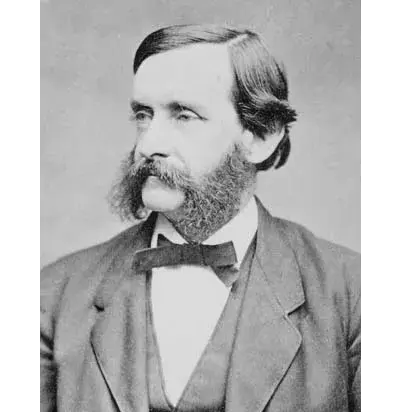
Thomas Wentworth Higginson was an American Unitarian minister, author, abolitionist, and soldier. He was active in the American Abolitionism movement during the 1840s and 1850s, identifying himself with disunion and militant abolitionism. He was a member of the Secret Six who supported John Brown. During the Civil War, he served as colonel of the 1st South Carolina Volunteers, the first federally authorized black regiment, from 1862–1864. Following the war, Higginson devoted much of the rest of his life to fighting for the rights of freed people, women and other disfranchised peoples.
