Lord Byron Quotes
The sight of blood to crowds begets the thirst of more, As the first wine-cup leads to the long revel.
6th Baron Byron
George Gordon Byron, 1788-1824, [Lord Byron], British Poet & Member of Parliament, Don Juan
Sourced by: Eigen's Political and Historical Quotations

The law enforcement officers were the ones who broke the law when they beat and brutalized the peaceful civil rights marchers. The “white niggers” refer to the white marchers including clergy.

The general had reported to the Czar that he had peacefully dissipated a protesting mob without firing a shot. The Czar felt that the absence of shooting and killing protesters would simply encourage more protests. See {613675}.
This quotation illustrates degree of hatred that the French had for the English for the hundreds of years of their European superpower rivalry.

He was then the Home Secretary and his guidance and restraint was to avoid overreaction. The magistrates however did not act with great restraint over a series of demonstrations which culminated in 11 deaths in The Peterloo Massacre,

He was arguing that the government should be able to prohibit public demonstrations on the grounds that the protesters are “irresponsible power.” This position has been taken sometimes by the American right, and is common in all totalitarian states.


The Police Commissioner had earlier given the green light to the police to use their clubs brutally and indiscriminately {626665} and afterwards made a statement that has been quoted ever since as he justified violating the Constitution because of their political views—see {626664}.

Louis Napoleon had seized control of France and had very little popular support amongst the aristocracy and middle class. However, the Socialists leading the uprisings frightened them more than Louis Napoleon as the Socialists had the support of the peasants who resented the abuses of the aristocracy and many of the middle class. This was true class warfare and not at all what was possible in the United States when American conservatives would claim “class warfare” when there was a move for more progressive taxation. In Europe, class warfare really meant death and destruction, so for many who knew the history, the claim of “class warfare” was frightening and a large part of the “Red Scare” in the United States.

Shortly after, he backed off the notion of having a bloodbath removing protesting students.

Several years before the Battle of Bunker Hill, revolutionary activity had already broken out in the American colonies—See {634132} for an example. This law gave the British authorities much more “clout” in dealing with the “seditious” American activities. It protected English law enforcement officials from being tried in local Colonial courts for murder or assault in putting down insurrections. George Washington and other Patriots were outraged over this law. See {634131}.

at the fall of the Soviet Union
He was forgiving them after his troops had killed some protesters the previous “Bloody Sunday” just for protesting their working conditions. See {613674} for how callous he was regarding demonstrators.

His home was right in the midst of the major riot area. The government had just instituted the draft to provide soldiers for the Civil War. The rich could avoid the draft by paying a modest fee. The Irish of New York were at just slightly above the Negro in the New York Socioeconomic scale and the two groups competed for the low skilled jobs. Many Irish felt that they were being forced to fight to free the Southern Negroes who when free would come to New York and compete for their jobs. They rioted and killed over 100 Blacks.

Two protesters were killed. The demonstration so affected the government that they pressured the Belfast local authorities to announce substantial increases in relief. The economy and the employment picture got no better that year.


He was sentenced to life in prison for his advocating Violence if the Uighurs would not be given their independence. They were then the 2nd largest Muslim group in China.


The British wanted to turn over control of India to Nehru's Congress Party and make India independent. However, there had been sectarian rioting and murder between Muslims and all the other religions of India—Hindus, Sikhs, Buddhists, and Christians. Wavell was not confident that Nehru and Congress could control the situation and huge massacres would result. Gandhi, who normally did everything to avoid violence, this time placed Indian independence first and demanded continuation of the complete transition process including the police and military powers. This is one of the very few occasions on which non-violence was not pre-eminent for Gandhi.


Jamil Abdullah Al-Amin

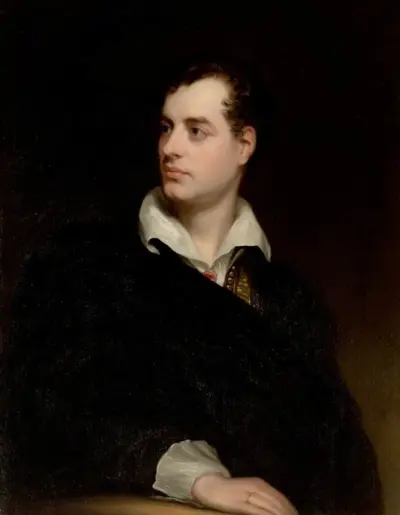
George Gordon Byron, 6th Baron Byron, FRS known simply as Lord Byron, was an English peer, who was a poet and politician. He was one of the leading figures of the Romantic movement and is regarded as one of the greatest English poets. He remains widely read and influential. Among his best-known works are the lengthy narrative poems Don Juan and Childe Harold's Pilgrimage; many of his shorter lyrics in Hebrew Melodies also became popular.
