Samuel Adams Quotes
No Mobs—No Confusions—No Tumult.
Samuel Adams, 1722-1803, Governor of Massachusetts, Member of the Continental Congress, Quoted in Howard Zinn, 1922-2010, A People's History of the United States
Sourced by: Eigen's Political and Historical Quotations


The import of this proverb that eventually things get so bad that people take radical steps to organize things. Unfortunately, historically when there have been periods of disorder and anarchy, a strongman or dictator usually takes over and provides the organization,


Dictators like Bashir view protests and demonstrations as threats to stability of the nation. The statement is code for “Stop the demonstrations, because stability is more important than reform.


He was arguing that the government should be able to prohibit public demonstrations on the grounds that the protesters are “irresponsible power.” This position has been taken sometimes by the American right, and is common in all totalitarian states.

The Police Commissioner had earlier given the green light to the police to use their clubs brutally and indiscriminately {626665} and afterwards made a statement that has been quoted ever since as he justified violating the Constitution because of their political views—see {626664}.

With the partition of India forming an independent Pakistan, ethnic riots broke out and millions of people were killed. This joint statement was issued to try and quell the violence but it had progressed too far. Jinnah as a political ploy to obtain the partition organized Muslims and threatened violence—see {627153} and {627169}. Things got out of hand with ethnic cleansing being an objective in many localities—see {627146} and {627149}.


This is an excellent example of the twisted, self-fulfilling logic of the Afrikaners in justifying apartheid. Many Afrikaners were inveterate racists, and were also usually armed which was a rural tradition of their early immigration and the Zulu and Boer Wars. Those whites would cause a riot if a black was allowed into a white audience performance. That in turn would cause chaos. Therefore mixed audiences could not be allowed. It never occurred to Botha and his colleagues that the government’s responsibility was to control and restrict the white rioters and instigators. This was not unique Afrikaner thinking; the same logic prevailed throughout the American South in the Jim Crowe segregation era.

Two protesters were killed. The demonstration so affected the government that they pressured the Belfast local authorities to announce substantial increases in relief. The economy and the employment picture got no better that year.


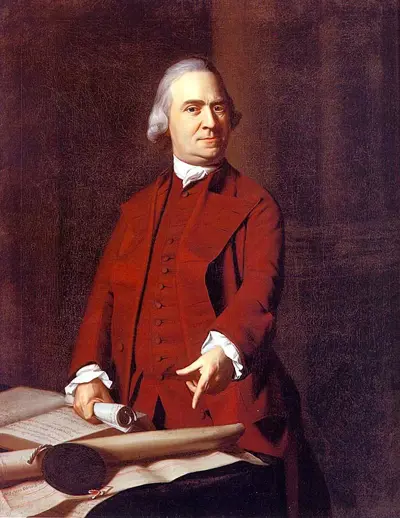
Samuel Adams was an American statesman, political philosopher, and one of the Founding Fathers of the United States. He was a politician in colonial Massachusetts, a leader of the movement that became the American Revolution, and one of the architects of the principles of American republicanism that shaped the political culture of the United States. He was a second cousin to his fellow Founding Father, President John Adams.
