Ito Hirobumi Quotes
The Sacred Throne was established at a time when the heavens and earth became separated. The Emperor is Heaven descended, divine, and sacred. He is preeminent above all his subjects. He must be reverenced and is inviolable. He has indeed to pay due respect to the laws, but the law has no power to hold him accountable to it.
See {43619} for a contradictory view of the Emperor.
Hirobumi Ito, 1841-1909, Japanese Prime Minister, Diplomat & Advisor to the Japanese Emperor, Commentaries on the Constitution of the Empire of Japan, 1889
Sourced by: Eigen's Political and Historical Quotations

Most European monarchies and strong, powerful states were theocratic empires and had as their foundation a ruling family and a national church. In Japan, the churches were politically weak, and so the designers of the Japanese empire created the concept of a divine emperor where spiritual and temporal power could be the embodiment of the state which in their view had to have both dimensions. See Ito’s statement on the subject: {604492}


The priest had come to the Empress to complain about the debauchery of her Prime Minister and made the error of describing him as the first man of the empire. The story may be apocryphal but it illustrates the character of the Empress. The source of the exact words are given in the historical novel, Luise Muhlbach, Joseph II. and His Court


William the Conqueror. See Henry of Huntington for another similar description of the King's authority.
This concept was later formalized in British law. See Blackstone.

This and many other statements have been used to refute the allegation made by some that the Japanese Emperor and Commander in Chief had no influence and control over the military and thus was not responsible for any war crimes.


The evidence pointed to the Emperor as being guilty of being responsible for war crimes. There were many who wanted to try the Emperor and if found guilty hang him. MacArthur was opposed to a trial for the Emperor as the practical consequence of a guilty verdict was too detrimental to his orderly occupation. The General’s view eventually prevailed, but only after material evidence and facts were withheld from Washington.

She was Queen of Scotland and claimed the English throne as well. While Elizabeth I was on the throne of England, Mary claimed that the court had no jurisdiction over an absolute monarch. Her son was in France at the time but eventually succeeded to the Scottish throne as James VI and the English throne as James I.


In 1948 Japanese Emperor Hirohito convened the Japanese Diet. By tradition the Emperor would receive the bows and homage of the leaders of the upper and lower houses in a special audience room before the ceremony. Matsumoto did not so greet Hirohito provoking a scandal of sorts. However, in the past, Hirohito had been worshipped as a living God. When his subjects attended an audience, they would bow low and leave walking backwards or sideways so as never to insult the Emperor be showing him their backs. The court maneuver was known as the “crab walk.’ However, under the 1946 Constitution the Emperor had become a mortal, human “symbol” of the state. Matsumoto was purged from politics with the active assistance of the American Occupation authorities. No one was willing to take the new Constitution both literally and seriously.

Even some who bought the party line that the Emperor had personally not started the war or the other incursions, blamed the Emperor for his inaction.


Actually, although the Emperor wanted to surrender, there was a military coup attempted to prevent his announcement being made to the Japanese people. Fortunately, it did not succeed, but he certainly had the alternative of fighting to the death. There were Japanese hard liners who believed that they could make the invasion of mainland Japan so costly in lives to the Allies that they could negotiate terms. The Atomic Bomb however, in the mind of the Emperor and other Japanese leaders rendered that strategy moot.


The Emperor of Japan and his family at the time controlled a large part of Japanese wealth. There were some criticisms emerging.
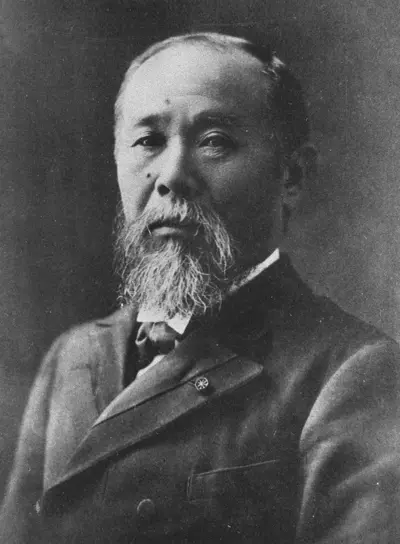
- Born: October 16, 1841
- Died: October 26, 1909
- Nationality: Japanese
- Profession: Politician
Duke Itō Hirobumi was a Japanese politician and the first Prime Minister of Japan. He was also a leading member of the genrō, a group of senior statesmen that dictated Japan's policies during the Meiji Era.
